By Dickson Adeyanju
The Nigerian media has been charged to uphold the truth at all times and not be swayed by the negativity that the modern technology has brought to the media space, where everyone who holds a handset thinks he is a media person.
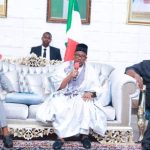
The Catholic Bishop of Katsina and the Chairman of the Communication’s Commission of the Catholic Bishops Conference of Nigeria, Most Rev. Gerald Mamman Musa, made this charge during the celebration of this year’s World Communications Day, which was celebrated at St. Gabriel Chaplain at the Catholic Secretariat in Abuja on Sunday, May 17, 2026.
The Bishop noted that this year’s theme, “Preserving Human Voices and Faces,” challenged Christians and media users to protect truth, authenticity, and human dignity online.
He noted that although technology has made communication faster and easier, many people are becoming spiritually and emotionally disconnected despite being constantly connected digitally.
Drawing lessons from the Apostles after the ascension of Jesus, Bishop Musa said prayer remains the “master key” to courage, wisdom, and endurance, noting that the disciples overcame fear by gathering in the Upper Room to pray while awaiting the Holy Spirit.
Also speaking during the occasion, the Secretary General of the Catholic Secretariat of Nigeria, Rev. Fr Michael Banjo said the theme spoke directly to Nigeria today.
“It reminds us that behind every message is a person, behind every story is a face, and behind every voice is a life that must not be ignored, mocked or wounded. In a country already burdened by insecurity, political tension, economic hardship and social mistrust, communication must not become another weapon of injury. Preserving human voices and faces means verifying before we share, so that falsehood does not destroy reputations, inflame communities or endanger lives. “Preserving human voices and faces means speaking without hatred and disagreeing without dehumanising, so that no Nigerian is reduced to a tribe, religion, political party or social label. Preserving human voices and faces means humanising victims of insecurity, poverty and displacement, so that they are not treated as statistics, but as persons with names, families, pains and hopes. Preserving human voices and faces means using the media and digital platforms to build peace, defend truth and strengthen national cohesion, rather than spreading fear, suspicion and division”.
He continued: “Distinguished members of the press, your vocation is especially indispensable in this task. In an age where everyone with a phone can publish, the professional journalist must become more necessary, not less necessary. The answer to misinformation is responsible journalism; the answer to propaganda is truth; and the answer to communication without faces is communication that restores the human person to the centre of national life.
“As Nigeria looks towards the coming elections, the call to preserve human voices and faces becomes even more urgent. Elections are not merely about parties, candidates and results; they are about ordinary Nigerians, their hopes, fears and future. When citizens are reduced to voting blocs, opponents to enemies, and communities to political tools, democracy loses its human face.
“Nigerians must therefore treat the election as a moral responsibility, not a battlefield. Let no one trade truth for propaganda, conscience for money, or national peace for partisan victory. Citizens must reject fake results, fake videos, hate speech, vote-buying and intimidation, and vote with a conscience formed by the common good. Those seeking power must remember that leadership is service, not conquest. Public institutions must protect the vote with transparency, and the media must protect the truth with courage. In this regard, the media have a sacred civic duty: to verify claims before publication, expose falsehood without becoming partisan combatants, resist sensationalism, avoid language that inflames ethnic or religious tension, explain the electoral process clearly, and give citizens the information they need to vote wisely and peacefully. In an election season, responsible journalism is not merely a profession; it is a service to democracy and to the human face of the nation”.
The National Director of the Social Communications Department of the Secretariat, Rev Michael Nsikak Umoh, who also marked his birthday on the occasion, thanked the media for the cooperation he has enjoyed from them since his assumption of office in 2020.
“As many of you are already aware, I am approaching the finish line of my mandate. In a few months, I shall formally disengage from my role as the National Director of Social Communications, concluding a very challenging and deeply rewarding six-year tenure.
Looking back at the journey we began in 2020, I am filled with immense gratitude to God for the enablement; to my Archbishop, Most Rev. Alfred Adewale Martins, for his graciousness in releasing me for this national assignment, and to the entire Catholic Bishops of Nigeria, for the trust and opportunity to serve on this wonderful capacity; and for their unflinching support all the period. By God’s grace, we can humbly say that we have revolutionised the digital presence of the Catholic Church in Nigeria, notably through the launch and sustenance of the Nigeria Catholic Network (NCN), the institutionalisation of ComWEEK, and the restructuring of our various communication bodies to form a unified, synergistic front. We must not fail to note, that all these are still work in progress, as there are still so much that needs to be done.
None of these achievements would have been possible without your unwavering solidarity. You, the gentlemen of the press, have been our reliable allies. You carried our voice to the public arena, amplified our structural interventions, and reported on our advocacy for public accountability, national infrastructure reform, and good governance with balance and integrity”, he said.
Uphold the truth, Katsina Catholic Bishop charges the media


Leave a comment Leave a comment