








FG disburses ₦38.93bn to tertiary institutions
The Federal Government has disbursed ₦38.93 billion to 166 public tertiary institutions…


OAU clarifies admission policy, reaffirms commitment to merit, National equity
The attention of the authorities of Obafemi Awolowo University (OAU), Ile-Ife, has…

Walking a mile in a frustrated Lagos lecturer’s moccasins, by Thanny Noeem Taiwo
By Thanny Noeem Taiwo, PhD The moccasin is a unique kind of shoe. It usually features a softly stitched sole, often adorned with embroidery to show elegance, yet it remains rugged enough to withstand adverse weather. It was a brilliant piece of literary art when Mary T. Lathrap used the moccasin as an analogy for empathy in her 1895 poem, "Judge Softly", popularizing the phrase "walking a mile in another man's moccasins." Empathy defines a profound understanding of someone else’s life, struggles, and viewpoint. While sympathy connotes simple pity, empathy demands a deeper engagement. It calls for walking the thorny path an individual has trodden before judging their actions. Sometimes, these actions may appear insensitive or inconsiderate, but they are often necessary under the circumstances. Academic staff at Lagos State University (LASU) and its sister institutions —Lagos State University of Education (LASUED) and Lagos State University of Science and Technology (LASUSTECH)—have become like offspring of the most influential parent in town. Their situation resembles that of legitimate children born to a wealthy, generous father who bestows lavish social welfare upon the community. Yet, these children are expected to watch their father take care of everyone else, even display profligacy, while accepting that they must go to bed hungry and walk around in shredded attire. When they ask the simple question, "What is wrong with our father?" They are told to be quiet. …

Teaching Profession vs. Nigerian Teachers: Why the disdain, neglect and poverty?
By Yunus OlawaleTeaching is universally acknowledged as one of the noblest professions…

Nigeria has Africa’s highest number of universities on THE 2027 ranking
South Africa remains Africa’s higher education leader, according to the recently released Times…

Ademosu to school owners: Prepare children for jobs of tomorrow
A brand practitioner and education advocate, Dr. Eddy A. Ademosu, has urged…


ASUU strike shuts three Lagos varsities over unmet 2025 pact
Academic activities ground to a halt across Lagos State’s three public universities…
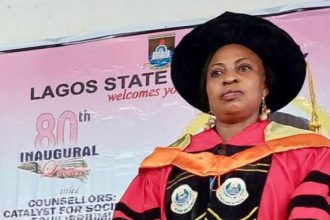
Destiny Helper: LASU’s new VC met me as LASU canteen worker, helped me become PhD holder
*Badejo My personal letter to the LASU new V.C.By Dr. Rebecca Uduakobong Adesiyan Dear Professor Badejo,Congratulations on this much-deserved appointment as the Vice-Chancellor of LASU. Please permit me to reintroduce myself. I am Dr. Rebecca Uduakobong Adesiyan (Uduak); I used to work at the LASU Staff Canteen (1999-2000). In 2005, I had the privilege of working with you at the LASU Ikoyi Campus as your secretary, while holding an Ordinary National Diploma in Secretarial Administration. I am writing today to express my sincere appreciation and to thank you for the exceptional kindness you showed me during that period. Your warmth, guidance, and motherly support left an indelible mark on my life and career, and I have carried those memories with me over the years. I can still remember how you would insist that I have breakfast at your home before we left for work in Ikoyi. At the time, I used to come to your home in Oko-Oba, Agege, every morning. You had just had your baby then, yet you still found the time and heart to look after me. Even at work, you would go out of your way to make sure I was comfortable, sometimes buying me food from the Chicken Republic close to the office. Not long after I assumed duty at the Ikoyi Campus, you were transferred back to the Main Campus. In your kindness, you approached the late Professor Mobolaji Lateef Adetona on my behalf, asking that I be retained because I had only just resumed at Ikoyi. He graciously did so. May his soul continue to rest in peace. I have never forgotten that gesture. I am therefore not surprised at all to learn that you are now the Vice-Chancellor of Lagos State University. You have worked, served, and sacrificed your time over the years, and I believe this position is a fitting recognition of your capacity, integrity, dedication, and labour of love. I am truly delighted to see how far you have come, and I thank God for continuing to honour and exalt you.…

FG moves to end ‘Borrowed Staff, Equipment’ in tertiary institutions accreditation process
The Federal Government has commenced major reforms to strengthen accreditation and quality…