
NE-IFA President Francis Moniedafe welcomes Gusau’s resignation and the NPFL’s $7.5 million sponsorship deal, calls for a fairer leadership process and says former internationals abroad will no longer remain on the sidelines
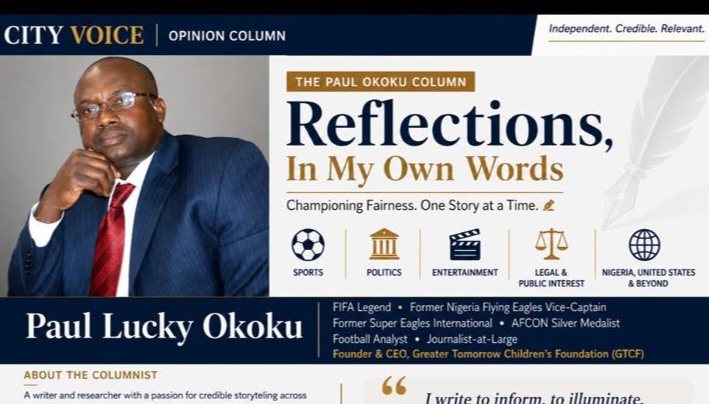
By Paul Lucky Okoku
Francis Moniedafe, President of the Nigerian Ex-International Footballers Association (NE-IFA), has declared that Nigerian former internationals living in the diaspora are prepared to become more active participants in discussions surrounding the rebuilding and development of Nigerian football.
According to Moniedafe, the knowledge, experience and perspectives of former Nigerian internationals living abroad have too often remained on the margins of important conversations concerning the country’s football.
He believes that should begin to change.
Moniedafe’s comments come at a significant moment for Nigerian football, following the announcement of a three-year, $7.5 million title sponsorship agreement between the Nigeria Premier Football League and EUROMATCH, as well as the resignation of Ibrahim Musa Gusau as President of the Nigeria Football Federation.
For Moniedafe, the developments offer both reasons for encouragement and an opportunity for Nigerian football to reconsider the direction of its leadership and governance.
“KUDOS TO ELEGBELEYE”
Moniedafe welcomed the commercial breakthrough achieved under NPFL Chairman Gbenga Elegbeleye.
“Kudos to Elegbeleye on his big catch,” Moniedafe said of the $7.5 million agreement.
“The deal is what the Nigerian league needs to help move it forward and get us where we need to be in Africa and, indeed, the world. Way to go, Bossman.”
The agreement, formally unveiled in Abuja on August 26, is worth $2.5 million per season over three years.
Elegbeleye has said that a substantial portion of the sponsorship proceeds will go to participating clubs, with the expectation that improved league revenues should contribute to better conditions for players and the clubs themselves.
According to Moniedafe, developments that strengthen the domestic league financially should be welcomed because a stronger professional competition is essential to the overall development of Nigerian football.
He also believes that commercial progress should eventually be reflected in the professional environment and welfare of the players whose performances sustain the league.
GUSAU’S EXIT SHOULD CREATE ROOM FOR REFORM
Moniedafe also welcomed Gusau’s decision to leave the NFF presidency.
“The best news coming out of the NFA office in a long time is the news that the chairman threw in the towel,” he said, using the federation’s former NFA designation.
“He did the right thing, and we thank him for his service.”
For Moniedafe, however, the significance of Gusau’s departure extends beyond the resignation of one individual.
He believes Nigerian football should use the moment to examine the system through which its leaders emerge and determine whether the existing structure adequately provides opportunities for qualified people from different constituencies within the game.
“This gives us a chance to sit down and map out a new path for our football,” Moniedafe said.
“There needs to be a new guideline where all contenders are given equal opportunities to contest fairly.”
In Moniedafe’s view, replacing personalities without addressing underlying structural concerns would represent a missed opportunity.
He argues that the focus should therefore extend beyond who occupies the next leadership positions to the fairness, openness and credibility of the process through which those leaders emerge.
QUESTIONS OVER THE PROPOSED NFF ELECTION
Moniedafe also questioned whether the previously proposed NFF election should proceed under the same arrangements following the leadership changes at the federation.
“I hope his resignation has put an end to the proposed election coming up soon,” he said.
The NFF elective congress had been scheduled for September 27 in Lafia, creating questions about what effect the leadership departures and proposed reform process could have on the electoral timetable.
According to Moniedafe, Nigerian football should use the present circumstances to carefully consider whether proceeding immediately with the existing electoral process would produce the broader reform he believes the game requires.
His position is that any eventual process should offer qualified contenders a credible and equitable opportunity to participate.
For the NE-IFA president, the issue is therefore not simply the identity of the next NFF president.
It is also about the system through which that president and other football leaders are chosen.
MONIEDAFE: PINNICK SHOULD ALLOW NEW LEADERSHIP TO EMERGE
Moniedafe was particularly direct in expressing his position on former NFF President Amaju Pinnick and what he views as Pinnick’s continuing involvement in discussions surrounding Nigerian football leadership.
“Amaju has no business meddling in anything football in Nigeria anymore. He had a chance, but messed it,” Moniedafe said.
That is Moniedafe’s personal assessment of the former NFF president’s record and continuing influence.
According to Moniedafe, those who have previously had opportunities to lead Nigerian football should be prepared to create room for fresh voices, different perspectives and new leadership ideas.
He argues that Nigerian football should avoid repeatedly recycling the same personalities and political influences whenever changes occur at the federation.
In Moniedafe’s view, the current situation instead presents an opportunity to widen participation and provide qualified contenders with equal opportunities to compete for leadership without predetermined political advantage.
MONIEDAFE: EXPERIENCE THAT SPANS GENERATIONS*l
Moniedafe’s views come from a football background stretching across more than five decades.
A commanding central defender during his playing career, he represented Bendel Insurance during one of the club’s most celebrated periods, including its famous 3–0 victory over Rangers International in the 1978 Challenge Cup final.
His national-team experience also places him within an important generation of Nigerian footballers.
Moniedafe was part of the Green Eagles environment alongside players such as Godwin Odiye, Segun Odegbami, Mudashiru Lawal, Samuel Ojebode, Mike Nsuk, Joseph Erico, Thompson Usiyan and others who became prominent names in Nigerian football.
His association with the Green Eagles extended through the 1970s and into the period preceding Nigeria’s historic triumph at the 1980 Africa Cup of Nations.
Moniedafe ultimately made a major personal decision that changed the direction of his life.
Rather than remain in Nigeria as preparations intensified for the 1980 Africa Cup of Nations, he chose to travel to the United States to further his education — a decision he has previously said he did not regret, even though Nigeria subsequently won its first AFCON championship on home soil.
His football journey continued at North Carolina State University, where he combined education with collegiate football and established himself as an accomplished defender.
Moniedafe subsequently remained involved in football in different capacities, including coaching, refereeing, administration and advocacy.
He eventually became President of the Nigerian Ex-International Footballers Association (NE-IFA), an organisation comprising former Nigerian internationals, many of whom are based in the United States.
According to Moniedafe, that combination of national-team experience, Nigerian club football, education abroad and decades of continued involvement with the game gives diaspora ex-internationals perspectives that can contribute meaningfully to conversations about the future of Nigerian football.
DIASPORA EX-INTERNATIONALS CANNOT CONTINUE TO BE SIDELINED
Moniedafe believes one of the problems NE-IFA must now confront is what he considers the continued marginalisation of former Nigerian internationals living outside the country.
Many members of the association combined football with university education before building careers in coaching, education, business, administration and other professions abroad.
According to Moniedafe, living outside Nigeria should not mean that those former internationals cease to have a legitimate voice in the affairs of the football system they once represented.
NE-IFA has, over the years, identified among its objectives the promotion of Nigerian football, advocacy for the welfare of present and former players, assistance to former internationals facing difficulties and the use of its members’ experience to contribute to football development.
Moniedafe now believes that advocacy must become more visible.
According to the NE-IFA president, the association is prepared to begin issuing statements and taking public positions when developments affect Nigerian footballers, whether active or retired, and when broader questions concerning Nigerian football require the perspective of former players.
He does not describe that increased visibility as an attempt to create confrontation with football authorities.
Rather, according to Moniedafe, it is about participation and ensuring that another constituency with significant experience in Nigerian football is heard.
THE LEADERSHIP BEHIND NE-IFA
NE-IFA brings together former Nigerian internationals based largely in the United States and is led by Francis Moniedafe as President, Femi Olukanni as Vice President, Charles Okoye as Secretary, and Ike Ofoje as Treasurer.
Together with the association’s wider membership, the officers help provide an organised platform through which former Nigerian internationals in the diaspora can contribute their experience, perspectives and advocacy to issues affecting Nigerian football and footballers.
“WE WANT TO HELP REBUILD NIGERIAN FOOTBALL”
Moniedafe believes Nigeria possesses a much larger pool of football knowledge and professional experience than is sometimes reflected in the administration of the game.
Many former internationals living abroad have spent decades developing experience not only within football, but also in education, coaching, business, management and other professional fields.
According to Moniedafe, their geographical distance from Nigeria should not disqualify them from contributing to the country whose colours they once represented.
“NE-IFA is committed to participating in rebuilding Nigerian football,” Moniedafe said.
He maintains that the association’s call for greater participation should not be interpreted simply as a demand for positions within the football establishment.
According to Moniedafe, it is fundamentally a call for inclusion.
He believes Nigerian football should be capable of drawing knowledge from former internationals wherever they live and creating avenues through which their experience can contribute to the development of players, competitions and football administration.
For Moniedafe, former internationals carry an institutional memory that should not be ignored.
They understand what it means to represent Nigeria.
They understand many of the sacrifices professional footballers make during and after their careers.
And many have accumulated decades of professional experience since leaving the playing field.
Moniedafe therefore believes the question should no longer be whether Nigerian ex-internationals in the diaspora have something to contribute.
The question, in his view, is whether the Nigerian football establishment is prepared to give them meaningful opportunities to contribute.
And under his leadership, Moniedafe says NE-IFA is prepared to speak more consistently and publicly on issues affecting Nigerian football, Nigerian footballers and the future direction of the game.
*Paul Lucky Okoku is a
FIFA Legend | Former Nigeria Flying Eagles Vice-Captain | Former Super Eagles International | AFCON Silver Medalist | Football Historian | Football Analyst | Journalist-at-Large | Founder & CEO, Greater Tomorrow Children’s Foundation (GTCF)