

By Bankole Adeshina
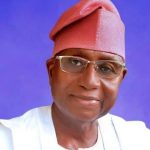
Professor Sylvester Odion Akhaine, a Professor of Political Science and a frontline pro-democracy activist, has advocated for a stronger citizen participation as a way of strengthening and propelling the nation’s democratic system of government to work.
Akhaine said this while delivering the 103rd Inaugural Lecture of the Lagos State University (LASU) Ojo Campus, in Lagos State on Tuesday at the Buba Marwa Auditorium of the institution. The theme of the lecture was: “Shifting for Good: The Weapon of Empiricism in The Disorder of The Third Wave of Democracy in Africa.”
Akhaine explained that learning from the evolutionary trajectory of the concept of democracy in Athens, Greece, it is crystal clear that it did not help deliver on development and social justice, the two important premises upon which its conceptual existence rely, until after the citizens rose to challenge the repressive, corrupt, and autocratic systems that held power and the people hostage at the time.
The scholar noted that his admonition was an urgent call to service, stressing that the act of holding power accountable to their social contracts and galvanizing others to do so, remains one of the most audacious and patriotic civic duties to the nation.
While responding to newsmen’s question of who is to take the lead in his admonition, the activist, said “the duty of nation building rests on the shoulders of all the citizens, especially the people of thoughts and leaders at all places and positions.”
In his comparative analysis of local, regional, and global politics, Akhaine said that democracy, in spite of its numerous challenges, remains the best form of government. He said this was so because it, ideally, takes into cognizance, important social issues such as people’s representation in power, fair and equitable distribution of national wealth, rule of law, and respect for the dignity and the fundamental human rights of the people among others.
He recalled that it was Abraham Lincoln that defined democracy ‘as the government of the people, for the people and by the people,’ which essentially becomes the bedrock of the liberal democracy that we have in the world today.
“But political philosophers have argued vehemently that greater attention should be instead focused on the democratization of governance system and wealth distribution processes among others.
“In line with this. Nigeria’s two national conferences that have been conveyed, have failed to takeoff. The first one was that of the former President Obasanjo, and the second that of the 2012 Confab by the former President Goodluck Jonathan. And with the failing of these conferences, the social justice issues they sought to address, still linger,” he submitted.
“When we look at the third wave of democracy in Africa, we would see the need for expedited action of the citizenry to stand up to the ruling elites and continue to demand for the delivery of social good, which is what democracy entails.”
Akhaine, while reacting to the recent public account of the regime and the events leading to the June 12 Presidential election annulment, by the former Military Dictator, General Ibrahim Babangida, the activist said the author tried frantically to give a distorted account of an event that happened publicly and carefully documented by many groups of researchers, political scientists, and journalists.
“In Biography, the writer can put a lot of details inside the document, without any serious implication. But in autobiography, which is an authentic account of the event being documented by the writer being the principle actor, there are many details that here not necessary. It was in attempt to put these details that the firmer military junta tried to distort history.
“It was very ridiculous because his account on the annulment of the June 12 election was not correct. It was a public event that feature many people in it. We were right inside of the event. Before the result of the election was announced, we already had collated our results and had announced, in an attempt to forestall any manipulation that eventually happened,” he added.
Akhaine’s inaugural lecturer was a reflection of his track records of excellence as a Journalist, an Academia, and a social activist. His impressive profile was somewhat intimidating, as it captures his well-documented pro-democracy struggle against the military junta of Late General Sani Abacha in post June 12 1993 Presidential Election in Nigeria. The election was adjudged the country’s freest, fairest, and most credible poll, before it was annulled by General Ibrahim Babangida, prompting the bloody post-election crisis.
Akhaine was the National Secretary for Campaign for Democracy (CD) and led series of street protests during the infamous military era in Nigeria.
The lecture was attended by dignitaries, led by the University Vice Chancellor, Professor Ibiyemi Ibilola Olatunji Bello, who was represented by Professor Olufunke Olatunde, the former Minister of Works, Ogbeni Rauf Aregbesola, the school registrar, Mr. Emmanuel A. Fanu, and the school Bursar, Mr. Saheed Babayinka among others.