Fitch revises Nigeria’s outlook to positive, affirms ‘B’ rating
The Federal Government has welcomed the decision by Fitch Ratings on October 9, 2026 to revise the Outlook on Nigeria's Long-Term Issuer Default Ratings to Positive from Stable, while affirming…

A flight of fancy: That proposed Airline by North-East governors, by Ayodeji Kolawole
By Ayodeji KOLAWOLE “Qu’ils mangent de la brioche” (“Let them eat cake!”). Widely attributed to Marie Antoinette, the phrase came to mind when the NorthEast Governors’ Forum (NEGF) announced at its October 3, 2026, meeting in Maiduguri that it planned to establish a regional airline. The governors said they had secured N10.8 billion of the N15.8 billion in funding needed for the proposed North-East Air Shuttle North-east governors announce plan to establish regional airline | TheCable. The announcement should outrage everyone concerned about the North - East region and Nigeria in general. Marie Antoinette, wife of the French monarch, Louis XVI was reported to have wondered why the masses were protesting another bread shortage during the reign of her husband when they could simply eat cake! Bread was a staple for France’s peasantry and working class, while brioche, bread enriched with butter and eggs, was for the upper class. It was insensitive and out of touch for the Queen, who the French referred to as Madame Déficit due to the impact of her extravagant spending on French finances, to think that people who could not afford ordinary bread would magically afford the luxury of brioche. Both her and her husband later lost their heads to the guillotine during the French revolution. The remark came to symbolise how disconnected the ruling class could be from ordinary people. Like Marie Antoinette, the NorthEast governors seem disconnected from their region’s realities and the daily struggles of the people they claim to govern. In a region ravaged by terrorism and underdevelopment, is a new airline really a priority? The governors must answer a few questions: What is the fate of the children whose education was disrupted by the Boko Haram insurgency, are they enrolled in education or skills programmes today? What psychosocial and economic support is available for the millions of victims of terrorism? How many local government areas, not to talk of wards have functioning healthcare centres? Can farmers safely return to their farms today? What is the state of roads and public transport? These pertinent issues seem to be flying over the heads of the governors for them to think a regional airline is priority now. Given the region’s profound development challenges, spending N15.8 billion on an airline to serve the governors’ tastes rather than people’s needs is unconscionable. By almost every development indices, the Northeast lags painfully behind. High levels of poverty and huge infrastructure gaps, compounded by almost two decades of terrorism have left the region below already troubling national averages on key humandevelopment and socio-economic indicators. While the six NorthEast states account for about 15% of Nigeria's population and almost one-third of its landmass, they contribute a paltry 3.5% to the nation’s Gross Domestic Product (GDP) and account for only about 5% of Internally Generated Revenue (IGR) by states. All the six states fall below the national average of 0.560 in Human Development Index (HDI), with four of the six states posting less than 0.5 (Gombe: 0.466; Borno: 0.464; Yobe: 0.439 and Bauchi: 0.372). The Poverty Rate in the region is about 70%, against the national average of 61%, with states like Gombe and Yobe recording multidimensional poverty rates of between 80%–86%. Unemployment rate in the region averages about 32% against a national average of 24%. https://blueprint.ng/north-east-development-commission-between-promises-and-human-capacity-building/ As The Economist noted recently about Borno state, but symptomatic of the region, “violence has wrecked the economy, leaving young people jobless and traders without customers. One 27-year-old in Maiduguri complains that he is forced to travel to neighbouring Chad to sell his grain, as locals cannot afford it.” https://www.economist.com/middle-east-and-africa/2026/10/01/nigerians-dislike-their-president-but-may-re-elect-him-anyway Some may argue that states have little control over these macroeconomic indicators, though that claim is debatable. Examining the state of public education, health, transportation, areas firmly within state control, give little cheer. Life expectancy across the zone is less than 55 years, with residents facing severe acute undernutrition despite the region being rich in agricultural potential. This severe undernutrition impacts over 40% of children under the age of five. In a recent report by The Economist, the paper highlighted the sharp increase in the number of malnourished women and babies admitted over the past three years in a clinic for starving people; it reports July 2026 as the worst month since the clinic opened in 2016. https://www.economist.com/middle-east-and-africa/2026/10/01/nigerians-dislike-their-president-but-may-re-elect-him-anyway According to UNICEF, 2.8 million children in the region are in need of education-in-emergencies support in three conflict-affected states of Borno, Yobe and Adamawa. In these states, at least 802 schools remain closed, and 497 classrooms are listed as destroyed, with another 1,392 damaged. It is little wonder therefore that academic outcomes in the region lag significantly behind the rest of the country, besting only the north-west region. Secondary school completion rate for the region is 38%, 25% below the national average. In the 2025 ranking of states with the highest WAEC credit pass rates, Yobe State was second from bottom with a credit pass rate of 14.1%, only better than Zamfara with 12.7%. The reason for these poor outcomes is not far-fetched. None of the states met the 26 per cent education policy benchmark in their 2026 budget allocation for education and worse still, none achieved full implementation of the budgetary provision for 2025. https://www.premiumtimesng.com/news/top-news/914882-data-what-north-eastern-states-allocated-to-education-in-their-2026-budget.html CODE, an NGO operating in the region, in its State of Education in the North-East Report 2024, stated that “Children's education in the North-East has remained poor due to poverty, insecurity, inadequate funding, poor parenting and inhibitive socio-cultural practices. Most of the school-age children work in low-paid jobs, often to fend for themselves or support their parents, when not victims of discrimination as in the case of the girl child”. It goes further to say, “one major factor underpinning the decline in school enrolment and retention is poor infrastructure. In most schools, poor facilities such as derelict classrooms (or total lack of it in some cases), leaking roofs, broken furniture, and unhygienic toilets, make students unsafe and outright unmotivated aside from impairing teaching and learning activities. This, essentially, makes children skip classes or drop out altogether, hence the continuity of the out- of - school children epidemic.” Without improving these facilities, how do we improve education outcomes and not make the next generation a ready pipeline of recruits for terrorists? On road infrastructure and public transportation, how many state’ roads in the region are passable. Is there a mass or public transport system in the states that eases the burden of commuters especially in the face of rising food and transport costs? If the Governors have N15.8 billion, then they can utilise same to complete the 550km North-East Highway which spans Kano, Jigawa, Bauchi, Yobe and Borno States and better connect their region. The project conceived since the 2000s has remained largely uncompleted with Daily Trust reporting last month that the “road was abandoned with unfinished stretches, big potholes and worn-out sections that are barely fit for use”. These are the kinds of serious problems government should be addressing, not going off on a tangent, looking to start an airline especially in a region where there are scheduled commercial flight operations already. Since Ibom Air’s launch and modest success, several state governors have floated plans for their own airlines (which in many cases are simply private airlines painted in state colours), often overlooking government’s constitutional primary purpose of citizens’ security and welfare. The governors should abandon this ill-conceived venture and focus governance on people’s healthcare, education, sanitation, public transportation, food and physical security needs before embarking on this flight of fancy. The people need bread, not planes! *Ayodeji, a lawyer and policy analyst can be reached via dejikolawole@yahoo.comÂ
CORA Youth Creative Club explores AI’s place in the Creative Industry
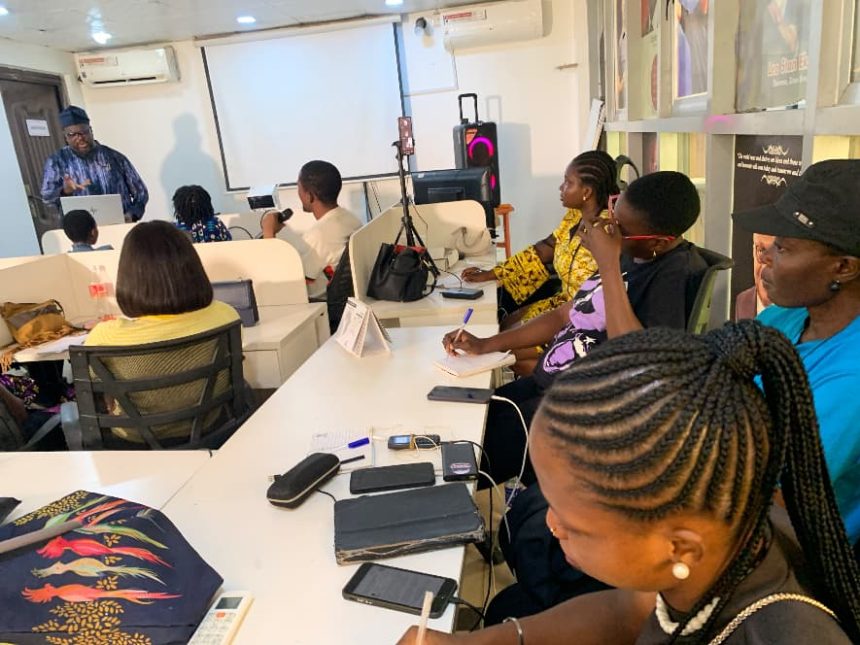
By Nathaniel Olawoyin FOR two days, October 6 ad 7, members of the CORA Youth Creative Club, CYCC, and some members of the public converge in GRA Ikeja for an…
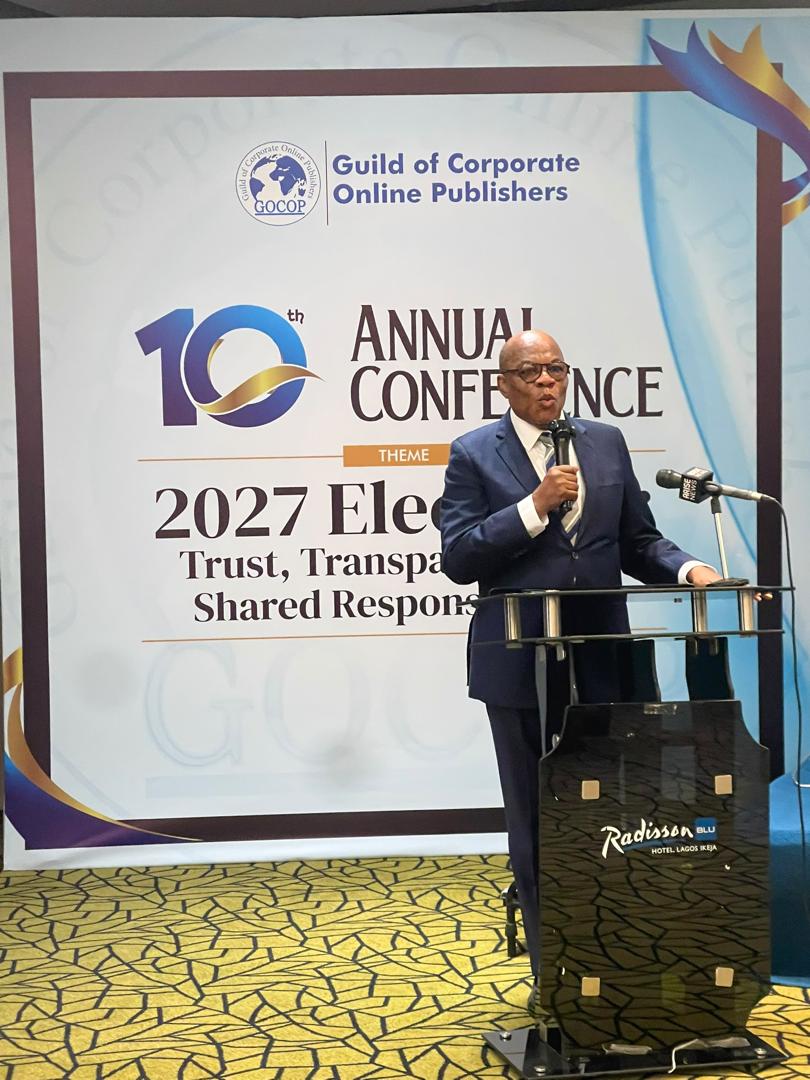
GOCOP conference: Agbakoba urges media to test right to announce election results
Chairman of the 10th Annual Conference of the Guild of Corporate Online Publishers (GOCOP), Dr Olisa Agbakoba, SAN, has urged the media to test in court the extent of its…
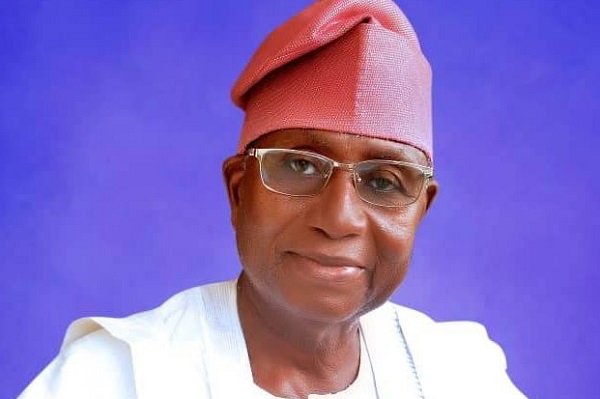
Tinubu, Sultan, Zulum, Southwest leaders expected as MUSWEN General Assembly meeting holds November
*MUSWEN President, Alhaji Oladejo President Bola Tinubu, Southwest states governors and the Sultan of Sokoto, Alhaji Muhammad Sa'ad Abubakar are among dignitaries expected at the 11th General Assembly of the…
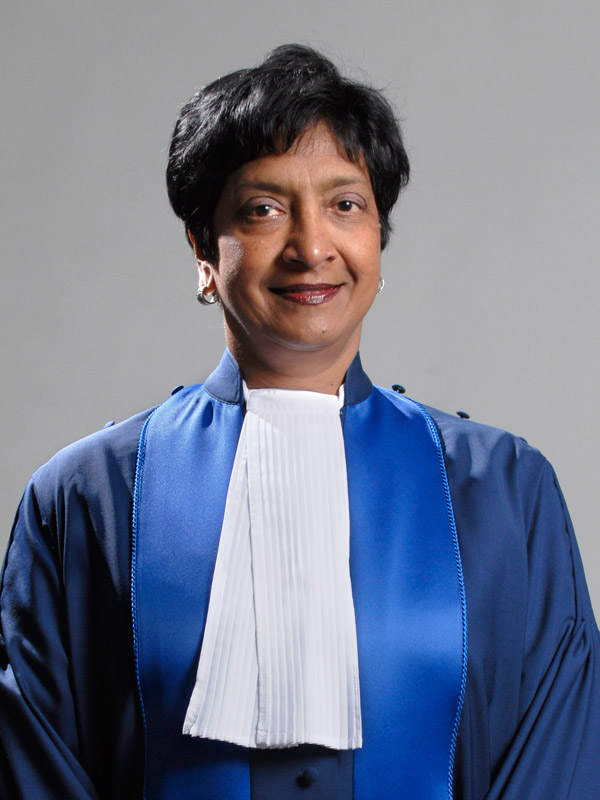
South African Navi Pillay wins 2026 Nobel Peace Prize for work at ICC
South African jurist and former ICC judge who oversaw a UN report that concluded that Israel committed genocide in Gaza, Navanethem 'Navi' Pillay, had won the 2026 Nobel Peace Prize.…

Ogun 2027: What Ogun voters expect from Yayi, Adebutu, by Mikail Mumuni
By Mikail Mumuni As political activities intensify in Ogun State ahead of the 2027 general election, one question deserves the attention of every governorship candidate seeking the people’s mandate: What…

Walking a mile in a frustrated Lagos lecturer’s moccasins, by Thanny Noeem Taiwo
By Thanny Noeem Taiwo, PhD The moccasin is a unique kind of shoe. It usually features a softly stitched sole, often adorned with embroidery to show elegance, yet it remains rugged enough to withstand adverse weather. It was a brilliant piece of literary art when Mary T. Lathrap used the moccasin as an analogy for empathy in her 1895 poem, "Judge Softly", popularizing the phrase "walking a mile in another man's moccasins." Empathy defines a profound understanding of someone else’s life, struggles, and viewpoint. While sympathy connotes simple pity, empathy demands a deeper engagement. It calls for walking the thorny path an individual has trodden before judging their actions. Sometimes, these actions may appear insensitive or inconsiderate, but they are often necessary under the circumstances. Academic staff at Lagos State University (LASU) and its sister institutions —Lagos State University of Education (LASUED) and Lagos State University of Science and Technology (LASUSTECH)—have become like offspring of the most influential parent in town. Their situation resembles that of legitimate children born to a wealthy, generous father who bestows lavish social welfare upon the community. Yet, these children are expected to watch their father take care of everyone else, even display profligacy, while accepting that they must go to bed hungry and walk around in shredded attire. When they ask the simple question, "What is wrong with our father?" They are told to be quiet. The latest round of friction stems from the efforts of the Lagos State Government —through officials in the Ministry of Establishments, Ministry of Finance, and Ministry of Tertiary Education —to renegotiate an agreement that took over a decade to reach. The 2025 FGN/ASUU Agreement was the result of collective bargaining involving all major stakeholders, including the National Universities Commission (NUC), the National Salaries, Incomes and Wages Commission, the Federal Ministry of Labour and Employment, the Federal Ministry of Education, and representatives of Governing Council Chairmen (Pro-Chancellors) of state universities. To the chagrin of every committed university teacher in Lagos, the state government maintains an unbothered posture, comfortably sitting on a powder keg while less buoyant states like Ekiti, Osun, and Ogun swiftly acted to demonstrate their commitment to tertiary education. This lack of proactive engagement and problem-solving proficiency has become typical. There is a clear tendency to kick the can down the road, hoping the issues will somehow resolve themselves. The evidence is scattered everywhere. For nearly five years, the Visitor has refused to act on the Visitation Panel report, which could resolve numerous labour and management issues that successive Vice-Chancellors have faced. Consequently, the fate of five academic staff members—who were union leaders—remains hanging in perpetuity. Conducting a visitation is the statutory responsibility of a Visitor; leaving its findings unaddressed over an eight-year tenure is nothing short of deliberate nonfeasance. The handling of the 25% and 35% salary adjustments, negotiated and announced under the Buhari administration, is another testimony to a calculated attempt to frustrate university lecturers. After twenty-three months of delayed implementation, the state government insisted on paying only twelve months of the accrued arrears. Negotiators were allegedly arm-twisted at the bargaining table using every trick in the book. Living and working in Lagos comes with immense financial strain. Rent alone is nearly 300% higher than in most other Nigerian cities. It is exasperating that a state government generating nearly four trillion naira in revenue is negotiating to pay its university workers less than less-endowed states. To borrow Gen Z slang: "the math is just not mathing." To put the suffering of Lagos university teachers into perspective. As I was writing this piece, I received the devastating news of the passing of a colleague—a department head at the university. His death, like several others in recent times, reflects the underlying toll of acute stress. At least five academic staff members are currently struggling with stress-induced strokes. This is the fate of hardworking lecturers in Lagos State who have poured their sweat and blood into elevating these institutions to enviable heights. They are often forced to cofuel vehicles just to get to work, despite a monthly takehome pay that barely carries them home. Retired professors fare no better. Many struggle to afford essential medications for various geriatric ailments. Individuals who sacrificed their most productive years to the university deserve far better care. For any discerning society, caring for the elderly is paramount. The lyrics of the late Sakara maestro, Yusuf Olatunji (Baba Legba), keep echoing in my head: “E ma ba agba je, bo’ya a kan ni lo’la” The moccasins worn by Lagos lecturers are severely weatherbeaten. They show obvious signs of neglect and abuse. If they finally tear completely after years of strain, it will not only be the wearers who suffer;the entire system they have served so diligently may collapse with them. * Thanny, Noeem Taiwo, PhD is the Secretary ASUU-LASU Steering Committee

NNPC Retail forgoes petrol profit margin to offer support to Nigerians amidst global fuel crisis
The Nigerian National Petroleum Company (NNPC) agreed today to forgo its petrol retail profit margin and sell to Nigerians at cost to cushion the impact of global crude oil price…

Mikel Obi on NFF leadership: “I can’t work with them because they are so corrupt”
By Paul Lucky Okoku Have you listened carefully to what John Mikel Obi said? Speaking on the Joy Sports Podcast in Ghana in August 2026, the former Super Eagles captain…