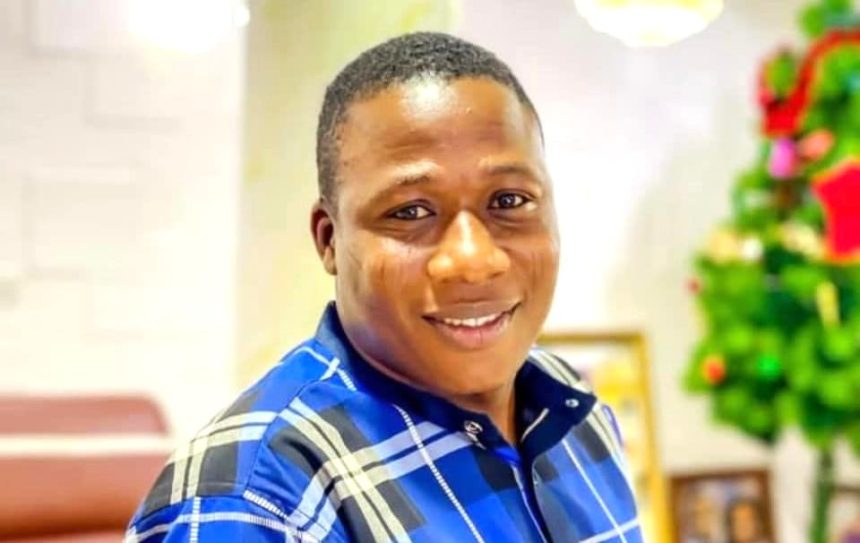
Yoruba groups blast Northern Elders on Igboho, says FG should crack down on abetters of violence
The Northern Elders Forum, (NEF) and the Arewa Consultative Forum, (ACF) have been accused of promoting violence and terrorism through what looks like their covert and veiled support for mass…


Police intercept truckload of military camouflage, illegal drugs in Surulere raid
Operatives of the Lagos State Police Command have carried out a major intelligence-led operation in Surulere, Lagos, intercepting an unregistered MAN diesel truck loaded with 47 sacks of military camouflage…

…For Tinubu not to win?!
By Prince Charles Dickson Ph.D Nigerians have never been shy about their frustrations. We complain in taxis. We complain in markets. We complain in churches and mosques. We complain in…

Why not BRI’N’CS? Nigeria’s case for a place in the name and future of BRICS, by Prof Mukhtar Imam
By Mukhtar Imam As the global order undergoes one of the most profound transformations since the end of the Cold War, institutions that once appeared permanent are increasingly being challenged by new centres of power. Among the most consequential of these emerging platforms is BRICS - the coalition originally comprising Brazil, Russia, India, China, and South Africa, now expanded to include additional members from across the Global South. The bloc represents not merely an economic alliance but a political statement: that the future of global governance cannot remain the exclusive preserve of the traditional Western powers. BRICS embodies the aspirations of developing nations seeking greater influence over global finance, trade, technology, and diplomacy. Yet, as the organisation continues to evolve, one question becomes increasingly difficult to ignore: Why not BRI'N'CS? Why should Nigeria not only be a member of BRICS but be recognised so prominently that its initial "N" becomes part of the very identity of the organisation? The proposition may sound ambitious, but Nigeria's credentials make it far from unreasonable. Nigeria: Africa's Indispensable Giant Nigeria occupies a unique position on the African continent. With a population exceeding 230 million people, it is Africa's most populous nation and one of the world's fastest-growing demographic powers. By 2050, Nigeria is projected to become the third most populous country globally, behind only India and China. Demography alone does not confer strategic importance. However, when combined with Nigeria's vast natural resources, entrepreneurial dynamism, geographical location, military capabilities, and diplomatic influence, the case becomes compelling. Nigeria possesses some of the largest proven oil and gas reserves in the world. It remains one of Africa's leading energy producers and holds immense potential in renewable energy, critical minerals, agriculture, and digital innovation. Its economy, despite periodic challenges, remains among the largest in Africa. Lagos alone has emerged as one of the continent's most vibrant commercial and technological hubs, attracting billions of dollars in investment and nurturing a generation of innovators whose impact is increasingly global. No discussion about Africa's future can be complete without Nigeria. A Strategic Anchor for Africa South Africa's inclusion in BRICS was a recognition of Africa's importance in global affairs. However, Africa is not a monolith, and its growing economic and demographic significance demands broader representation. Nigeria offers what few countries can: a combination of scale, influence, resources, and continental reach. The country has historically played a leading role in peacekeeping operations across West Africa, contributed substantially to regional stability through the Economic Community of West African States (ECOWAS), and consistently advocated for African interests in international forums. Nigeria's diplomatic footprint extends far beyond the continent. From climate negotiations to trade discussions and United Nations reforms, Abuja has increasingly emerged as a voice that cannot be ignored. In practical terms, a stronger Nigerian presence within BRICS would significantly deepen the bloc's engagement with Africa's largest market and fastest-growing consumer base. The India Connection The timing for Nigeria's elevation within BRICS could hardly be more favourable. India, one of Nigeria's closest strategic partners, currently occupies a position of significant influence within the organisation. The relationship between New Delhi and Abuja has been built over decades on mutual respect, economic cooperation, and shared developmental aspirations. India has consistently distinguished itself as a responsible global actor and a bridge between developed and developing nations. It has championed the concerns of the Global South while maintaining constructive engagement with major powers across geopolitical divides. Its leadership during its presidency of the G20 demonstrated an ability to build consensus in an increasingly polarised world. The inclusion of the African Union as a permanent member of the G20 under India's stewardship was widely recognised as a landmark achievement for Africa and the Global South. India's foreign policy has often been characterised by strategic autonomy, pragmatism, and a commitment to development-oriented cooperation. Unlike many traditional powers, India approaches its partnerships with developing countries through capacity-building, technology transfer, healthcare cooperation, educational exchanges, and mutual growth. Nigeria has been one of the beneficiaries of this approach. Indian companies have become among the largest investors in Nigeria, operating across sectors ranging from manufacturing and pharmaceuticals to telecommunications and agriculture. Bilateral trade between the two countries has expanded steadily, while thousands of Nigerians have benefited from educational opportunities and professional exchanges in India. Perhaps most importantly, both countries share similar aspirations: reforming global institutions to better reflect contemporary realities and ensuring that the voices of developing nations receive the attention they deserve. If there is any country within BRICS that fully understands Nigeria's strategic significance, it is India. Beyond Symbolism The suggestion of incorporating Nigeria's initial into the BRICS identity is, of course, largely symbolic. However, symbols matter. The evolution from BRICS to BRI'N'CS would represent more than a linguistic adjustment. It would acknowledge the reality that Nigeria has become indispensable to any serious conversation about Africa's future. It would also signal that BRICS is prepared to adapt its structures and identity to reflect the changing balance of power in the Global South. More importantly, Nigeria's fuller integration into BRICS initiatives could generate tangible benefits for all parties involved. The country offers a massive consumer market, abundant natural resources, significant human capital, and a strategic gateway to West and Central Africa. For BRICS, Nigeria strengthens Africa's representation. For Africa, Nigeria amplifies continental influence. For the Global South, Nigeria provides another powerful voice advocating for a more equitable international order. A Moment That Should Not Be Missed The world is witnessing the gradual emergence of a multipolar international system. In such a world, influence will increasingly belong to countries capable of combining demographic strength, economic potential, strategic resources, and diplomatic credibility. Nigeria possesses all four. The question, therefore, is no longer whether Nigeria deserves a seat at the BRICS table. That debate has largely been settled by the country's growing relevance to global affairs. The real question is whether BRICS can afford to overlook a nation whose future trajectory will significantly shape Africa's economic and political landscape throughout the twenty-first century. As BRICS charts its next phase of expansion and consolidation, the bloc should look carefully toward Africa's largest nation. Perhaps the time has come to move beyond BRICS. Perhaps the future is BRI'N'CS. And perhaps that future should begin now. * Prof Imam is with the Institute for Peace and Conflict Resolution (IPCR) Abuja. Â
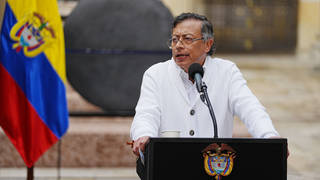
Colombia’s president accuses Israel of hacking his country’s election portal
Outgoing Colombian President Gustavo Petro has accused Israel of hacking his country's presidential election, claiming that changes to election servers allowed outsiders to manipulate voting data. He made the remarks…

Lasisi Olagunju: Oluwo, Elebuibon and Terror war
By Lasisi Olagunju The Oluwo of Iwo, Oba Abdulrasheed Adewale Akanbi, recently threw a challenge at Yoruba spiritual leaders. His target was the forest where terrorists are holding schoolchildren and…
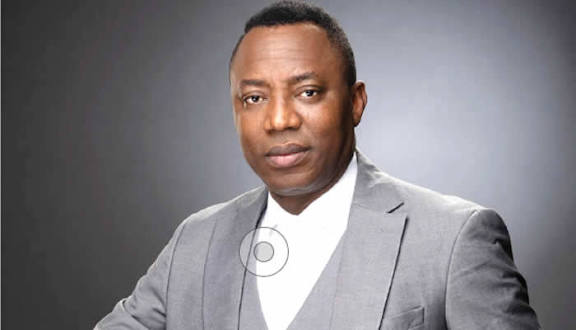
Alleged Cybercrime: Court remands Sowore at Kuje Correctional Centre
The Federal High Court in Abuja, on Monday, ordered the remand of online publisher and African Action Congress (AAC) presidential candidate, Omoyele Sowore, at the Kuje Correctional Centre. Justice Mohammed…

PawaPay hits 3 billion mobile money transactions as daily volume doubles
PawaPay, a leading pan-African payments aggregator, has processed three billion successful mobile money transactions through its platform - a milestone that reflects growing demand from businesses that need to collect…
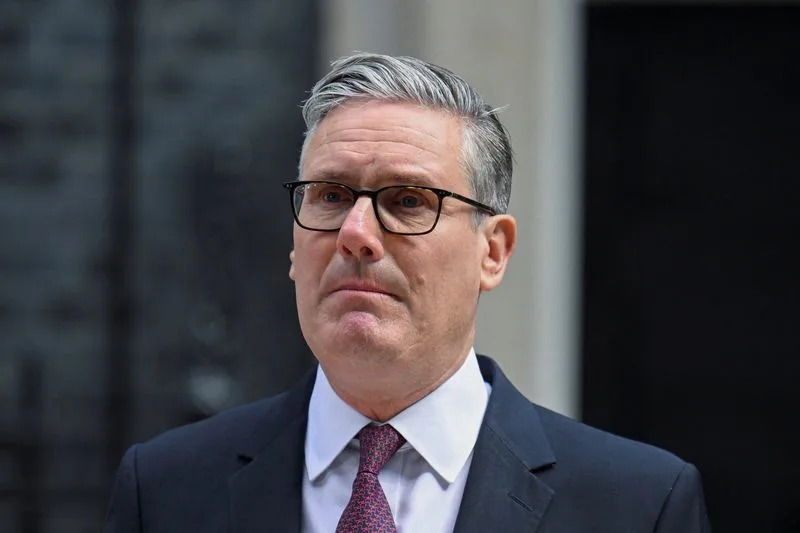
UK Prime Minister Keir Starmer resigns
UK Prime Minister Keir Starmer has announced that he will resign from his post and will step down as the leader of the Labour Party. In an address outside 10…
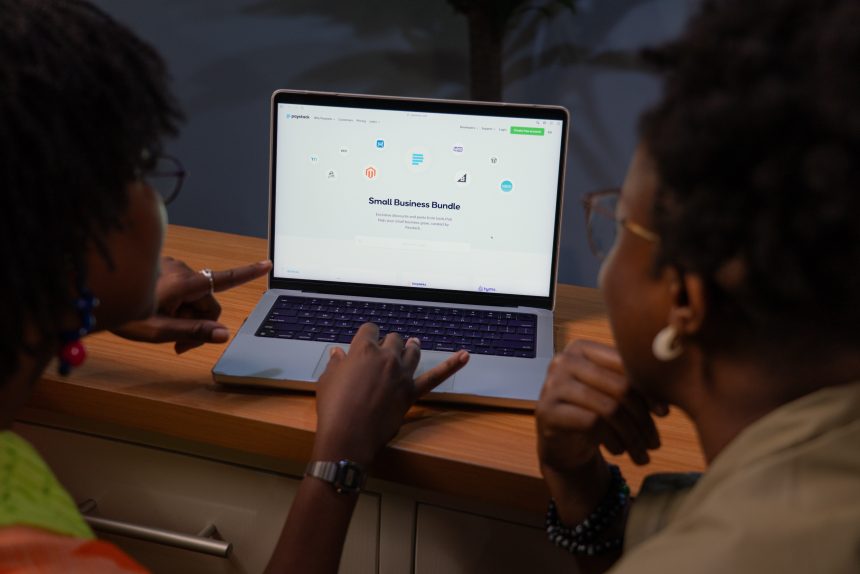
Paystack launches small business program to support Nigerian businesses
Paystack, one of Africa's leading payments technology companies, has launched the Paystack Small Business Program to support Nigerian small businesses through a range of initiatives designed to help them grow,…