

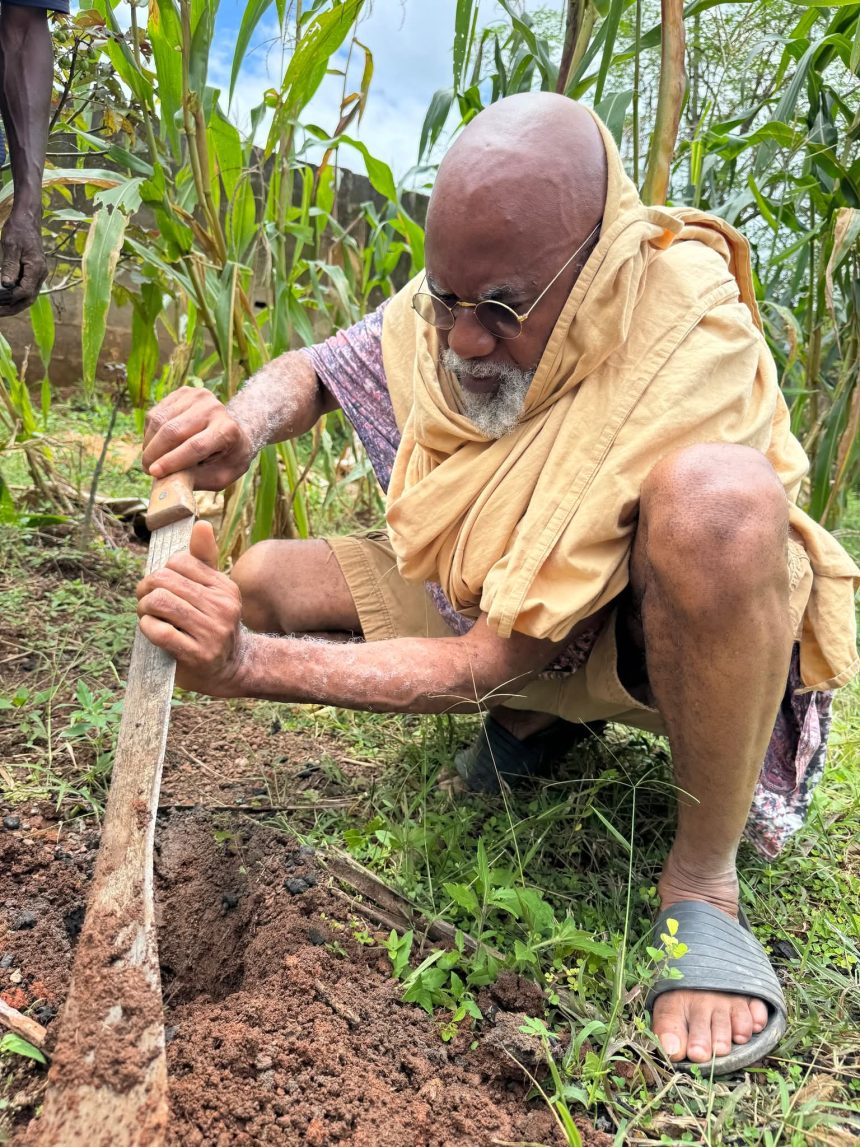
By Moyo Okediji
I felt both ashamed and saddened while watching a news report in which a Nigerian man lamented that he could no longer provide adequate food for his three children.
He attributed his family’s hardship to the country’s current economic crisis.
The report, aired by a Western media outlet, carried a title along the lines of “Nigerians Struggling to Provide Nutrition for Young People.”
The man was presented as representative of the Nigerian experience.
A sewing machine behind him suggested that he worked as a tailor.
He explained that whereas he once needed about one thousand naira to feed his family for a meal, the cost had risen to about five thousand naira.
Unable to meet that expense, he said his family was going hungry. Frustrated, he blamed the government for his predicament.
I was not only saddened by the story; I was disturbed by the image it projected of Nigeria.
Just a week earlier, I had travelled extensively through southwestern Nigeria.
For the previous three months, rain had fallen regularly—sometimes heavily, sometimes gently—while the sun continued to shine with remarkable consistency.
The landscape was lush and vibrant, covered in rich green vegetation nourished by abundant rainfall.
The weather could hardly have been more favorable for agriculture. Large and small farms dotted the countryside.
Yet I noticed something else. In many places, more land was covered with weeds than with cultivated crops.
Around homes, schools, and public buildings, weeds flourished where food could easily have been grown.
The land itself seemed to be pleading for cultivation.
In much of southwestern Nigeria, seeds require little encouragement. Plant them, and they germinate. Tend them with modest care, and they flourish.
Why, then, do we speak of food scarcity in a land so naturally endowed?
Have we convinced ourselves that land around our homes is unsuitable for growing food? Have we become too educated to farm, or simply too busy to cultivate what we eat?
Even those without access to farmland have options.
A plastic bag or bucket filled with soil can produce vegetables capable of supplementing a family’s diet.
The climate is generous, and the soil remarkably fertile.
We have a choice.
We can continue waiting for the government to solve every problem while blaming it for our hunger.
Or we can take greater responsibility for producing at least part of the food we consume.
Meanwhile, international media continue to broadcast images of Nigerians as symbols of deprivation.
Yet the truth is that Nigeria possesses some of the most fertile and agriculturally productive land in the world.
In that sense, Nigeria occupies what might be called the Global Gold Medal Real Estate of agriculture.
Our climate and soils are among the finest on earth. If there were a World Cup for agricultural potential, our land would surely rank among the champions.
This extraordinary natural inheritance should inspire us rather than discourage us.
While governments undoubtedly have important responsibilities, citizens also have the capacity to improve their own circumstances.
Let us transform weeds into food crops.
Let us cultivate the land that surrounds us.
And let us replace the narrative of hunger in a land of abundance with one of productivity, dignity, and self-reliance.
May Olodumare continue to bless us.
Àṣẹ