

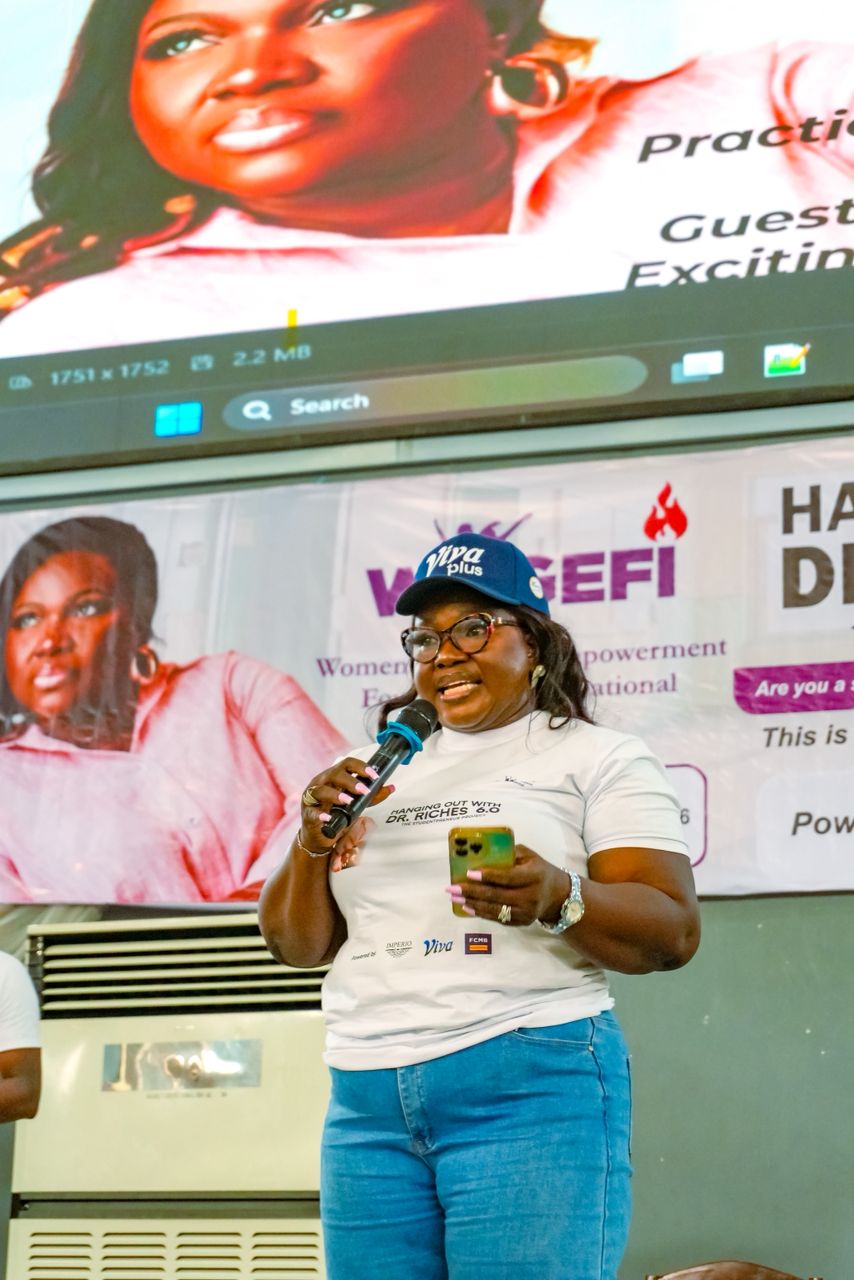
*Dr Oni
By Shakirudeen Bankole
Dr. Oni-Buraimoh Olawunmi, a Professor of English Language at the Lagos State University, is leading a quiet economic revolution within the academic institution.
Every year, through her nonprofit initiative, the Women and Girl Empowerment Foundation International (WOGEFI) , she organises public awareness campaigns, addressing critical socioeconomic and development issues.
Topics such as gender equality, education, human rights, poverty eradication, marriage, parenting, gender based violence, economic empowerment, vocational development, and the need for social safety nets often take centre stage during the hangouts.
The gender activist packages these interventions under themes such as “Love Feast with Dr. Richie” and “Hanging Out with Dr. Richie,” targeting young and energetic undergraduate students on campus.
Driven by the growing impact of the initiative, what began as a small gathering has transformed into a massive convergence attracting over 5,000 student participants.
The focus has also evolved to include access to funding, networking, mentorship, and entrepreneurial development.
To achieve these goals, subject matter experts, policymakers, development partners, funders, stakeholders, and civil society organisations are invited annually for engagements centred on mentorship, investment opportunities, and business development.
“The goal has always been to help young people find their paths and equip them with the knowledge and skills needed to navigate life and make meaningful impact,” she told our correspondent.
“School is a scam” remains one of the most controversial and dismissive phrases increasingly used by many young Nigerians today, who question the value of formal education vis-a-vis the economic opportunities it creates.
This perception is largely fuelled by concerns that the country’s educational system places greater emphasis on theories and concepts, with less attention paid to practical application and entrepreneurial innovation.
Data from the National Bureau of Statistics showed that Nigeria’s unemployment rate stood at 4.3 per cent in the second quarter of 2024, while youth underemployment and informal employment continue to rise across the country.
Similarly, the National Universities Commission estimates that Nigerian universities graduate hundreds of thousands of students annually into an increasingly competitive labour market
.
Over time, many young Nigerians have come to realise that acquiring certificates alone no longer guarantees economic stability or fulfilment
.
Dr. Richie, as Oni is fondly called, appears to understand this dilemma and has continued to use her annual gathering to promote practical solutions.
According to her, the definition of education has moved beyond the mere ability to read and write.
“We now believe that true education holds the power to transform minds into creative machines capable of providing solutions to the many social problems that exist today,” she said.
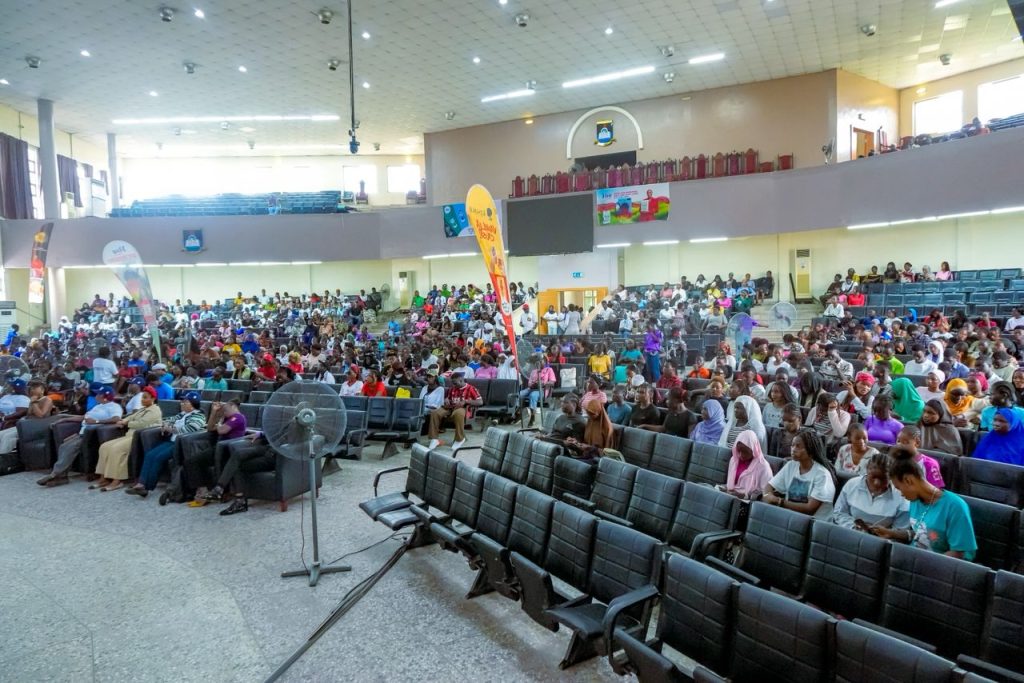
*The hall was packed at the 6th edition
The sixth edition of the annual convergence was held on Wednesday, May 20, at the Buba Marwa Auditorium of the university, with the 5,000 capacity hall filled to the brim.
At the event, facilitators, including business owners and brand managers, trained participants on business ideation, entrepreneurship, and access to funding.
The highlight of the gathering was the announcement by the facilitator that she had secured startup loans for dozens of prequalified participants who applied for the facility.
“To be honest, it is not difficult to understand the disconnect between what many students are taught in school today and the economic realities confronting them,” she stated.
“This is why I am doing the little I can through my NGO and this annual gathering to help young Nigerian youths find their paths.
“Luckily, this year, FCMB agreed to provide loan facilities for our student entrepreneurs without collateral. The facility comes with a 0.75 per cent interest rate, and my NGO will offset the interest on behalf of the students. We have already selected qualified applicants from the pool of those who applied, and the presentation will be done before the end of this programme.”
Dr. Francis Dansu, Assistant Director at the Directorate of Entrepreneurship and Skills Development at the Lagos State University, admitted during his remarks that Nigeria’s economic challenges require urgent and creative solutions.
Speaking with our correspondent, he said the shrinking availability of white collar jobs and the growing number of graduates produced yearly have forced tertiary institutions to rethink their priorities.
“The truth is clear for everyone to see. White collar jobs are no longer sufficient for the growing number of educated Nigerian youths. After graduation, many young people struggle to find meaningful opportunities. This has become a major concern for all stakeholders,” he said.
“This is why entrepreneurship has become central to our approach at LASU. We have made entrepreneurship studies compulsory for undergraduates, while also providing vocational training and practical classes to complement theoretical knowledge and give students competitive advantage.”
Barbara Onianwah, Head of Marketing at Aspira Nigeria Limited, one of the brand partners for the event, trained participants on business ideation, incubation, and scalability within the Fast Moving Consumer Goods sector.
“FMCG is a value driven industry that people depend on daily for survival,” she explained, noting that regardless of social status, human beings will always require food, hygiene products, clothing, and other essentials.
“People will always brush their teeth, bathe with soap, eat food, drink water, look good, smell nice, and maintain their devices. Understanding these daily needs can expose creative minds to sustainable business opportunities,” she said.
According to her, one of the strengths of FMCG businesses is their flexibility and sustainability.
“Unlike many other businesses, FMCG ventures can be combined with other jobs or engagements without conflict. It is also one of the few industries that successfully transfers from one generation to another,” she added.
She stressed that exposing students to such business knowledge at a young age would better prepare them for economic independence in the future.
“Even if you have a regular job, understanding FMCG business gives you an advantage. If you eventually leave paid employment for product sales, branding, or social services, the knowledge will still work for you. This is why ASPIRA partnered with Dr. Richie to impact LASU undergraduates,” she stated.
Also speaking at the event, Esther Ahamba, Growth and Senior Brand Manager at Imperio International Limited, described the beauty industry as another viable and rapidly growing sector capable of creating wealth for young entrepreneurs.
In her lecture titled, “Building a Beauty Business from Campus,” she said beauty remains an essential aspect of human existence and continues to evolve alongside society.
“This is because human beings have elevated the desire to look good and smell nice to the level of essential needs such as food and shelter,” she said.
According to her, students can creatively develop products and services that address various beauty related needs and challenges, even within the campus environment.
She listed hair care, skincare, makeup, fragrance production, barbing, hairstyling, sewing, beauty accessories, wig making, and beauty content creation as profitable business opportunities for undergraduates.
“Beauty related enterprises can thrive with consistency and strategic marketing,” she added.
Concluding her session, she urged students to remain focused, innovative, and determined to become employers of labour instead of joining the growing queue for white collar jobs after graduation.
“As part of your business strategy, you must ask important questions: What beauty problems do students complain about? Which products are too expensive? Which services are difficult to access on campus?
“Providing solutions to these challenges can help you build sustainable businesses rooted in solving real human problems,” she concluded.