

By Shakirudeen Bankole
The Lagos State Government, has warned against attitudes and behaviors that are complicating efforts to manage the menace of depression and suicidal ideation across the metropolis.
The government, through its Mental Help Desk, described social stigma and discrimination as one of the predisposing factors discouraging self-reporting for help and rehabilitations by persons suffering from various degrees of mental illnesses or conditions in the state.
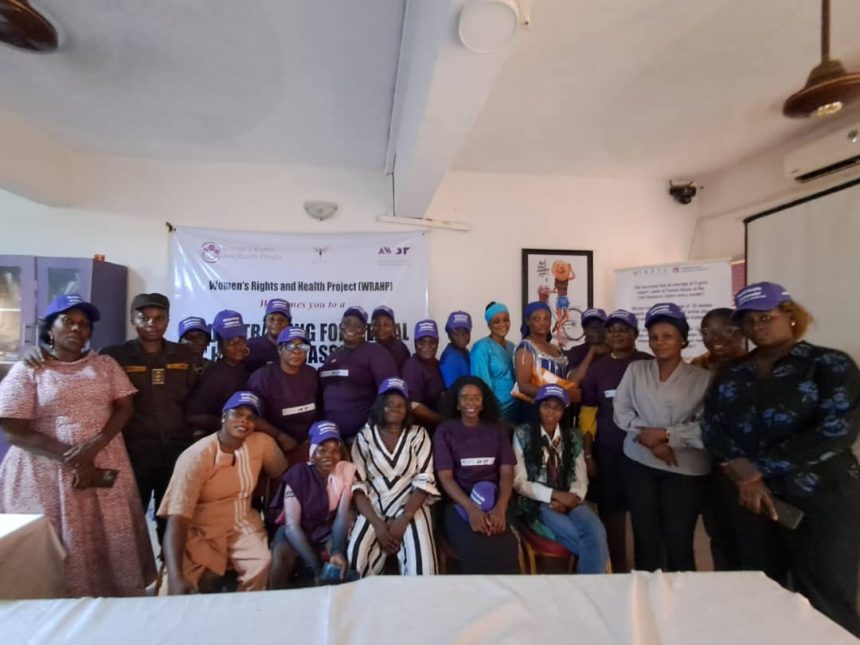
At a 2-day workshop training for Mental Health Ambassadors on Mental Health Awareness, organized by the Women’s Rights and Health Project (WRAHP), Joshua Nnatus, the Digital Awareness Lead for the Lagos State Government Ministry of Health, Mental Health Desk, said the government would not hesitate to invoke the provisions of the Lagos State Mental Health Act, to prevent further exacerbation of the public health crises.
The Lagos State Mental Health Act was signed into law in 2008 by the then governor, Mr. Babatunde Raji Fashola, as a legal framework that details ethical guidelines and rights of the depressed and suicidal persons in the state, among others. The Federal Government adopted similar measure in 2023 and the document was signed into law by the former President, Mr. Muhammadu Buhari.
The framework details that access to medical care is a fundamental human right for sufferers and stigmatization is a criminal offence, including at homes, work, and society.
“If you are suffering from mental health illness and our employer is neive to sack you on that basis, the Menta Health Act under its employment protection provision, empowers you to sue and demand handsome compensation, which the law would compel your employers to provide,” the facilitator said.
Speaking at the workshop, Nnatus, said “cultural and spiritual myths, in addition to gaps in public knowledge, are frustrating mitigating factors being put in place and it was time for the public to be onboarded on government’s efforts to wholistically address the situation.
“As Mental Health Ambassadors, it is part of your obligations to go into the communities to conscientize and sensitise the people on the need to seek help when they are struggling with their mental health. It is ok to seek spiritual guidance but prayer is no substitute for therapy and treatment. We must also continuously burst the myths that depression is spiritual attacks that can only be cured by spiritual cleansing or fasting and prayers,” he warned.
According to the American Psychological Association (APA), depression is a mental health condition, which is manifested in repeated or perpetual feeling of worthlessness.
The condition is diagnosed through symptoms such as social withdrawal (from activities that sufferer previously enjoys), self-harm (unwillingness to care for self or intention to want to harm self), and constitution of danger to self and others (attempting to harm self and or others).
On the other hand, APA, defined Suicide or suicidal ideation as the extreme level of depression that has persisted for at least six months, with manifesting symptoms such as a hallucination, schizophrenia, and the insistent willingness to want end one’s life, even if previous attempt had failed, among others.
The Lagos State Mental Health Desk, is one of the state government’s special interventions to the public healthcare crises on depression and suicidal ideation, the two condition that have been repeatedly linked to either of or combinations of biological (heredity), social (learnings through life experiences) and or psychological (emotional feelings or unresolved traumas) factors.
“In situations of suspicious or reported cases, Mental Health Ambassadors can identify affected persons, apply Psychological First Aide (PFA), then refer the person(s) to designated menta health hospitals or rehabilitation centers,” Nnatus said.
Speaking with newsmen at the event, Mrs Precious EbereChukwu, WRAHP’s Programme Officer, said the training workshop is a special intervention project funded by the African Development Women Fund with the aim of leveraging public sensitization campaign as mitigating measures for mental health crisis in the state.
According to her, the Ambassadors were selected from five local government areas and LCDAs in Lagos, including Amuwo-Odofin, Ojo, Alimosho, and Ajeromi-Ifelodun, among other.
”Under this project, we have selected 21 Mental Health Ambassadors, to be trained as first line responders at the grassroots level. These ambassadors are leaders and representatives of different cluster groups at the local level, who in turn will not only go ahead to step down the knowledge, but would be obligated to look out for the early warning signs, manifesting symptoms, and refer and follow-up with the cases,” Eberechukwu said.
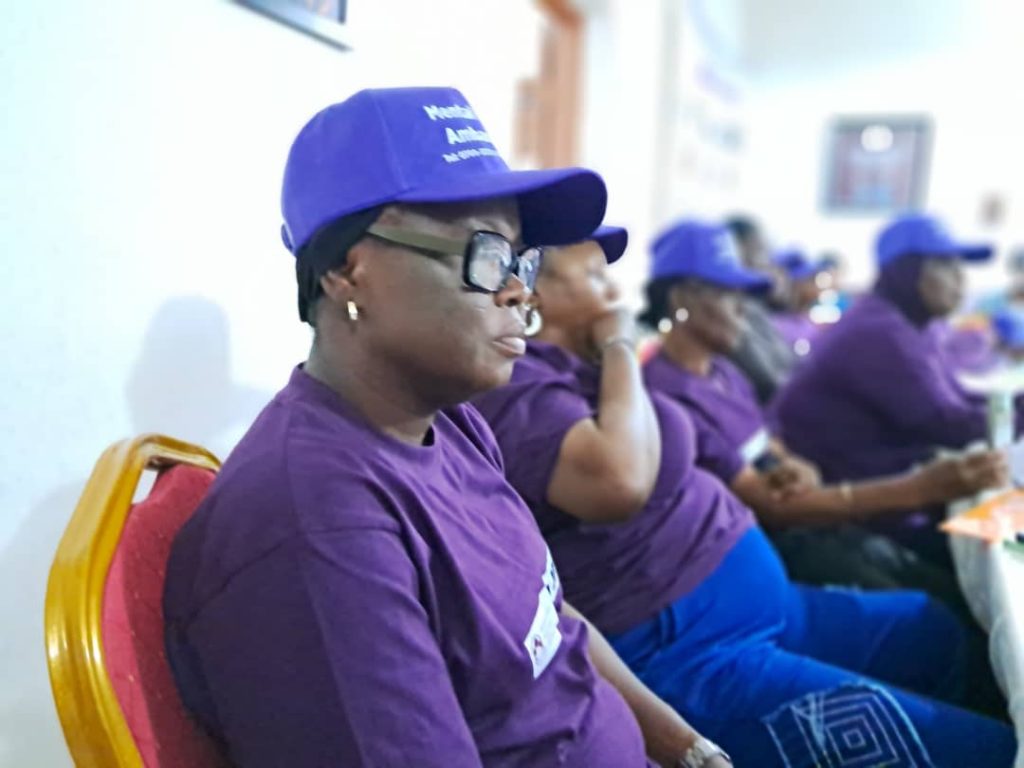
Speaking on behalf of the trainees, Mrs Blessing Bridget Peters, a community leader in Ojo Local Government and a beautician by classification, said the opportunity has positioned her to help provide psychosocial supports to everyday life struggles at her community.
“For instance, two days ago, when I returned home from my shop, my son told me of a woman selling food close to me about a fight between her and her husband. The husband, I was told, was chasing her with cutlass. If I had been exposed to this type of training, I would have been able to intervene, and provided technical guidance on how to seek help and address the instigating factor,” she said.
The Mental Health Ambassadors, under the project are charged with five statutory responsibilities: Raise awareness, spot and recognize early warning signs; offer First line support; refer and accompany to get medical attention or psychological support, advocate; and document each and every intervention.
“However, there are guidelines on the donts of the assignment. And these bothers on ethical considerations and professionalism.
“ An ambassador must not disggnose or label a person as depressed or suicidal. You must not prescribe drugs. You must not provide counseling and therapy. You must not force or coerce people to get help. You must seek contents. You must maintain highest level of confidentiality unless the case has to do with threat to life of the person, others, and or public safety and security. You must not charge fees or collect gift or any form of gratification for the service. You must not sexually exploit people. You must not promise cure, quick fix or creates saviour complex. And you must not harm…” Nnatus, warns.