

By Mukhtar Imam
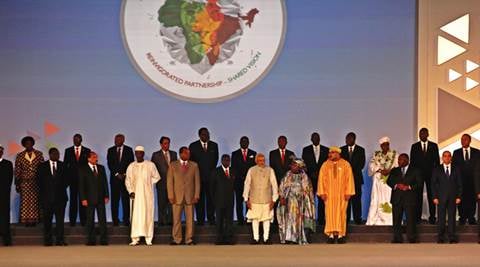
As the world gradually transitions from an era dominated by unipolar and heavily Western-centric global arrangements into a more multipolar international order, the forthcoming India-Africa Summit stands as a timely and strategic platform for strengthening South-South cooperation among developing nations.
More importantly, it offers an opportunity for countries of the Global South to collectively redefine development, diplomacy, trade, technology transfer, and international solidarity on terms that better reflect their peculiar realities and aspirations.
The significance of the summit goes beyond diplomacy and ceremonial engagements. It symbolizes the growing determination among developing countries to forge partnerships rooted not in domination or dependency, but in mutual respect, shared experiences, and collective advancement.
For Africa, the summit presents another critical opportunity to deepen engagement with one of the most successful post-colonial development stories in the Global South — India. Subsequent discussions will attempt to highlight why this is a shift away from the usual rhetoric of the Global-North/South summits which are usually masked as partnerships but designed and intent on exploitation.
Shared Historical Experiences
One of the strongest foundations of India-Africa relations lies in their shared historical experiences. Both regions suffered immensely under colonial rule. Colonialism distorted indigenous political systems, weakened local economies, exploited natural resources, and entrenched structures of dependency that many countries are still struggling to overcome decades after independence.
Like many African countries, India endured economic exploitation, social fragmentation, and political suppression under foreign domination. Yet, despite these constraints, India emerged over the decades as a major global player in technology, pharmaceuticals, education, manufacturing, digital innovation, and democratic governance.
This transformation provides both inspiration and practical lessons for African nations seeking pathways toward sustainable development and strategic autonomy. The story of India is therefore not merely one of economic growth; it is a story of resilience, institutional evolution, indigenous innovation, and strategic policy planning. It is this experience that makes India particularly relevant to Africa’s contemporary development aspirations.
South-South Cooperation Beyond Rhetoric
For decades, discussions about South-South cooperation have remained largely rhetorical within global diplomatic circles. However, the evolving global environment now demands practical and result-oriented partnerships among developing nations.
The India-Africa Summit offers precisely such an avenue. Unlike many traditional partnerships that often come with stringent political conditions and asymmetrical power dynamics, India’s engagement with Africa has generally been viewed through the prism of partnership, capacity building, and shared growth. Indian cooperation initiatives across Africa have focused significantly on human capital development, technology transfer, healthcare, agriculture, digital infrastructure, vocational training, and educational exchanges.
This approach aligns closely with Africa’s developmental priorities. African countries are not merely seeking aid; they seek partnerships that empower local capacities, support industrialization, enhance technological competence, and promote economic independence. India’s developmental cooperation model demonstrates that countries of the Global South can collaborate effectively without replicating exploitative patterns associated with historical imperial structures.
Trade and Economic Opportunities
The summit is also expected to deepen economic engagements between India and African countries. Trade between India and Africa has expanded considerably over the years, covering sectors such as energy, pharmaceuticals, agriculture, telecommunications, information technology, manufacturing, and mining. Africa’s youthful population, expanding markets, and vast natural resources complement India’s strengths in technology, industrial expertise, affordable healthcare solutions, digital services, and small-scale manufacturing systems.
Particularly important is India’s globally recognized pharmaceutical industry, which has played a crucial role in improving access to affordable medicines across many African countries. During global health emergencies such as Covid 19, India demonstrated the strategic importance of accessible pharmaceutical manufacturing within the Global South.
Similarly, India’s advances in digital governance, fintech innovation, and information technology provide important lessons for African states seeking to modernize governance systems, improve service delivery, and enhance financial inclusion.
The summit therefore presents an avenue for both sides to institutionalize stronger economic frameworks capable of driving inclusive growth and reducing excessive dependence on external actors.
Technology Transfer and Capacity Building
Perhaps one of the most important dimensions of India-Africa cooperation lies in knowledge sharing and capacity development. Africa’s greatest asset is its youthful population.
However, without adequate investment in education, technical training, entrepreneurship, and digital skills, this demographic advantage may not translate into economic prosperity. India’s experience in expanding technical education, promoting innovation ecosystems, and building globally competitive technology sectors offers practical models that African countries can adapt to local contexts. After all, life is about adopting and adapting. Several African students already benefit from Indian scholarship programmes, technical exchanges, and academic partnerships.
The summit should therefore prioritize expanded educational cooperation, research collaboration, digital learning initiatives, and vocational training schemes targeted at empowering African youth.
Additionally, stronger collaboration in artificial intelligence, cybersecurity, digital public infrastructure, renewable energy, and space technology could open new frontiers for South-South innovation partnerships.
Strengthening Global South Solidarity
The India-Africa Summit also carries broader geopolitical implications. For too long, global governance structures have inadequately reflected the voices and interests of developing countries. Institutions established in the aftermath of the Second World War continue to disproportionately favour established powers despite changing global realities.
Africa and India share common positions on many global issues, including the reform of multilateral institutions, climate justice, equitable global trade systems, food security, energy transition financing, and fair representation within international organizations.
By strengthening strategic coordination, India and countries across the African continent can amplify the collective voice of the Global South in shaping a fairer and more inclusive international order. Importantly, this cooperation should not be seen as antagonistic toward any region or bloc.
Rather, as a representation of legitimate effort by all emerging economies to pursue balanced partnerships that prioritize their national interests and developmental objectives.
Infrastructure, Connectivity and
Industrialization
Africa’s industrial transformation remains one of the continent’s most pressing priorities. The continent continues to grapple with infrastructure deficits, energy shortages, transportation challenges, and limited industrial capacity.
These constraints undermine productivity, job creation, and competitiveness. India’s experience in developing affordable technologies, small and medium enterprise ecosystems, and cost-effective infrastructure solutions could prove beneficial in supporting Africa’s industrial ambitions.
Areas such as railway modernization, renewable energy development, digital connectivity, agro-processing, local manufacturing, and healthcare infrastructure provide significant opportunities for expanded cooperation.
Beyond physical infrastructure, institutional infrastructure is equally important. Stronger regulatory systems, efficient public institutions, transparent governance structures, and effective policy coordination will remain essential for maximizing the benefits of India-Africa cooperation.
A Partnership Built on Mutual Respect
One of the most commendable aspects of India-Africa relations is the perception that the partnership is largely built on mutual respect and historical solidarity. India has consistently supported anti-colonial struggles and liberation movements across Africa during critical periods in history.
This historical goodwill continues to shape contemporary diplomatic relations between both sides. However, as cooperation expands, it is important that engagements remain genuinely beneficial to local populations.
African leaders must strategically negotiate partnerships that promote local content development, technology localization, employment generation, skills transfer, and sustainable development outcomes.
Likewise, India must continue to distinguish its engagement model through transparency, inclusivity, respect for sovereignty, and long-term developmental commitment.
Nigeria and Africa’s Strategic Role
For countries like Nigeria, the summit presents enormous strategic opportunities. As Africa’s largest population centre and one of its major economies, Nigeria stands to benefit immensely from expanded collaboration in technology, healthcare, energy, education, agriculture, pharmaceuticals, and digital innovation. More broadly, African countries must approach the summit not merely as isolated national actors, but as part of a broader continental vision under frameworks such as the African Continental Free Trade Area and the African Union’s Agenda 2063. Collective bargaining, regional integration, and coordinated developmental planning will strengthen Africa’s negotiating position and maximize the long-term benefits of partnerships with emerging powers like India.
Conclusion
The forthcoming India-Africa Summit is more than a diplomatic gathering. It represents a powerful affirmation that countries of the Global South can work together to shape their destinies through cooperation anchored on shared history, shared struggles, and shared aspirations. India’s remarkable transformation from a colonized nation into a globally influential economic and technological power offers valuable lessons for Africa’s development journey. Equally, Africa’s vast human and natural resources, expanding markets, and youthful dynamism make the continent an indispensable partner in the future of global growth. At a time when the international system is undergoing profound transformation, the summit offers hope for a more balanced, equitable, and collaborative global order — one in which the voices of developing nations are not merely heard but respected. Ultimately, the success of the India-Africa Summit will not be measured solely by communiqués or ceremonial declarations, but by the extent to which it deepens practical cooperation, empowers ordinary citizens, expands opportunities for young people, and strengthens the collective capacity of the Global South to chart an independent and prosperous future.
*Imam writes from:
Mukhtarimam01@gmail.com