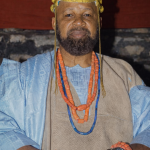


The President of the Nigerian Academy of Letters, Professor Andrew Haruna has announced the death of Professor Emeritus Biodun Jeyifo, which event occurred today, 11th of February, 2026.
Professor BJ, as he was fondly called had a distinguished career at the then University of Ife and later held dual appointments at Cornell and Harvard Universities.
His last public outing was at an international event held in his honour at the Muson Centre to mark his 80th birthday on the 5th of January, 2026. It was organised by the Wole Soyinka Centre for Investigative Journalism.
It has been said of him: “No other scholar, apart from Edward Said, Gayatri Spivak and Homi Bhabha, is more attentive to the radically dispersed accents or strands of thinking the post-colonial the way BJ has done.”[2]
Jeyifo is generally regarded as the world’s preeminent scholarly authority on the works and career of Wole Soyinka. His award-winning book on the 1986 Nobel laureate, Wole Soyinka: Politics, Poetics and Postcolonialism (Cambridge University Press, 2004), is regarded as the most comprehensive study of the author’s work, and the most sophisticated single author study of any writer in African postcolonial studies. While the leading scholars and critics of Soyinka’s works took the view that the difficulties and complexities in the Nigerian writer’s body of work were either merely self-constitutive or willfully obscurantist, in this book and other books and essays on Soyinka’s writings, Jeyifo based his analysis on the premise that modernist and avant-gardist techniques and language were at the heart of the alleged difficulties and complexities. The book is notable for its detailed readings of Soyinka’s greatest works of drama, poetry and fictional and nonfiction prose, combining intellectual rigor with sheer writing pleasure in his explications.
Born in Ibadan, Nigeria on Saturday, January 5, 1946, Jeyifo had all his formal education – primary, secondary and tertiary – in that city when it was the cultural and intellectual capital of a decolonizing Nigeria and one of the most cosmopolitan cities in the African continent. This background is deeply and widely reflected in Jeyifo’s work, career and honors. His postgraduate education and subsequent professional career in the United States built on the foundations of the intellectual and cultural cosmopolitanism that he had absorbed from his basic formal education at home in Nigeria.
Jeyifo earned a PhD in 1975 from New York University, where Richard Schechner was his PhD supervisor; he had gained a master’s degree from the same university in 1973, and a bachelor’s in 1970 at the University of Ìbàdàn, where he graduated with first-class honours — the third in the university after Dan Izevbaye and Molara Ogundipe.[3] He also holds a D.Litt (honoris causa) from Ọbafẹmi Awolọwọ University.[4] He has taught at Cornell University, Oberlin College, and Harvard University. Jeyifo was the first president of the Academic Staff Union of Universities (ASUU) in Nigeria, when he taught at the University of Ife.
Nigeria, Jeyifo taught at the University of Ibadan (1975–77) and the University of Ife (now Obafemi Awolowo University, 1977–87). Then he taught for one year (1987–88) at Oberlin College, Ohio before moving to Cornell University in Ithaca, NY, where he taught from 1989 to 2006 in the English department.
Thereafter he moved to Harvard University in 2006 in the Comparative Literature and African and African American Studies departments, a position from which he retired in 2019. In all these institutions, Jeyifo invested a lot of intellectual and moral capital in working very closely with undergraduate students, graduate students and younger, untenured junior faculty.
At Ife and Cornell, Jeyifo joined other faculty members in producing successful doctoral students who went on to become distinguished academics in their own right. Also, a good number of students that he taught and mentored at the University of Ibadan and OAU-Ife went on to become acclaimed and influential book publishers, journalists, media practitioners and executives that played leading roles in the struggles against military autocracy and predatory civilian misrule in the last four decades. Altogether Jeyifo’s teaching, research and publications in the 1970s through the 1980s were pivotal in transforming the curriculum of Nigerian universities. In this unprecedented development, Marxist literary, theater and cultural studies, Marxist philosophy and historiography, and Marxist social sciences became so prevalent in the curriculum of the country’s universities that the dons were accused by the government of “not teaching what they were paid to teach.” In a retort to this accusation that became famous, Jeyifo asserted that he and his cohorts in the movement were indeed teaching what they were paid to teach on account of texts like Chinua Achebe’s Things Fall Apart and No Longer at Ease and Wole Soyinka’s Season of Anomy and The Man Died that were savagely critical of the state of affairs in the postcolonial era. Much later at Cornell University in the early 2000s, Jeyifo was a member of a group of English department faculty that gave free weekly classes to inmates at the all-male maximum-security correctional facility of Auburn in upstate New York. On this project he has testified that it was an unforgettable experience for him to teach the writings and thought of the likes of Frantz Fanon, Amilcar Cabral, Nelson Mandela, James Baldwin and Chinua Achebe, among others, to prison inmates, some of whom were lifers.
* with backgrounding from wikipedia