


By Victoria Eta-Messi
Today, as the Commission celebrates the International Women’s Day, it reaffirms its commitment to gender equality and the empowerment of women in Nigeria’s electoral process. International Women’s Day highlights both the remarkable contributions women have made in society, including within the electoral system, and the need for further efforts toward true gender parity. INEC has made significant strides in ensuring women’s inclusion and representation within its leadership and decision-making bodies.
As the theme for the 2025 International Women’s Day is ‘Accelerate Action,’ INEC recognizes that gender equality is not only a matter of fairness, but also a critical pillar in strengthening democracy. A leadership that reflects gender balance, where women equally participate in decision-making, leads to more inclusive and responsive governance. INEC continues to make efforts to ensure that women hold leadership positions within the Commission.
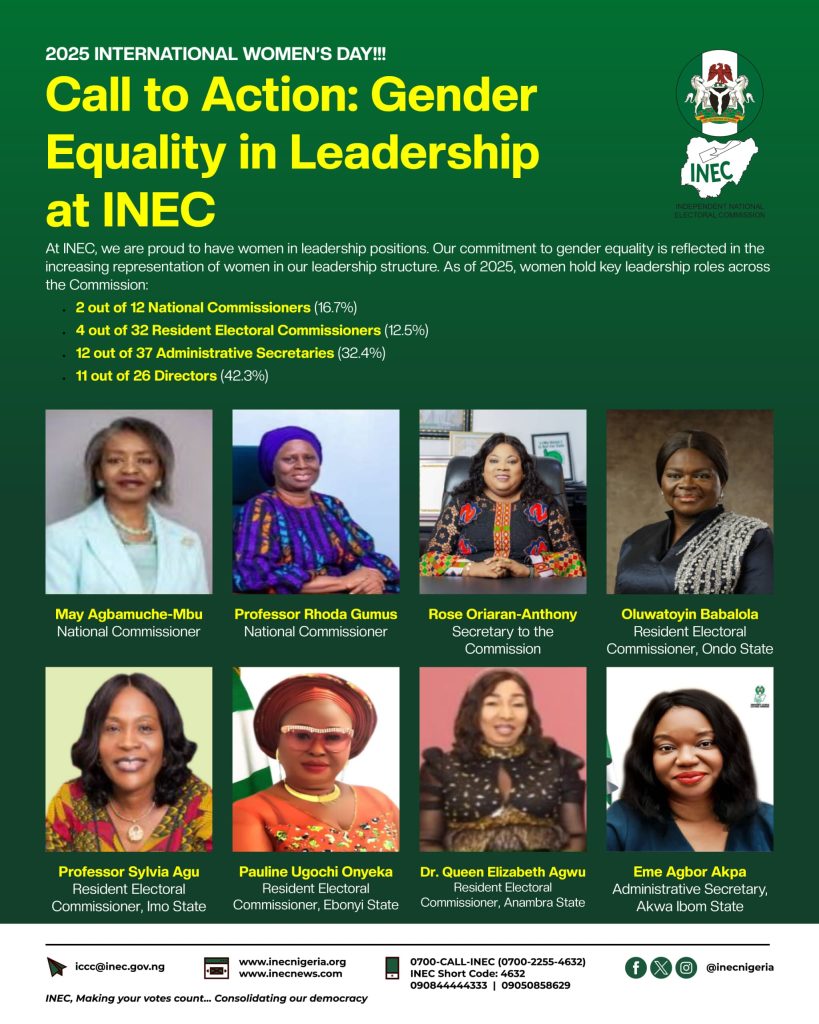
The current leadership composition at INEC includes:
National Commissioners: Out of 12 National Commissioners, 2 are women, making up 16.7% of the total leadership. While this is a notable milestone, there is still work to be done in achieving gender balance in this decision-making body.
Secretary of the Commission: The position of Secretary, responsible for overseeing INEC’s operations, is held by a woman.
Resident Electoral Commissioners (RECs): Of the 32 Resident Electoral Commissioners, 4 are women, accounting for 12.5% of this critical leadership group. This figure reflects an ongoing effort to improve gender balance at regional levels of the Commission.
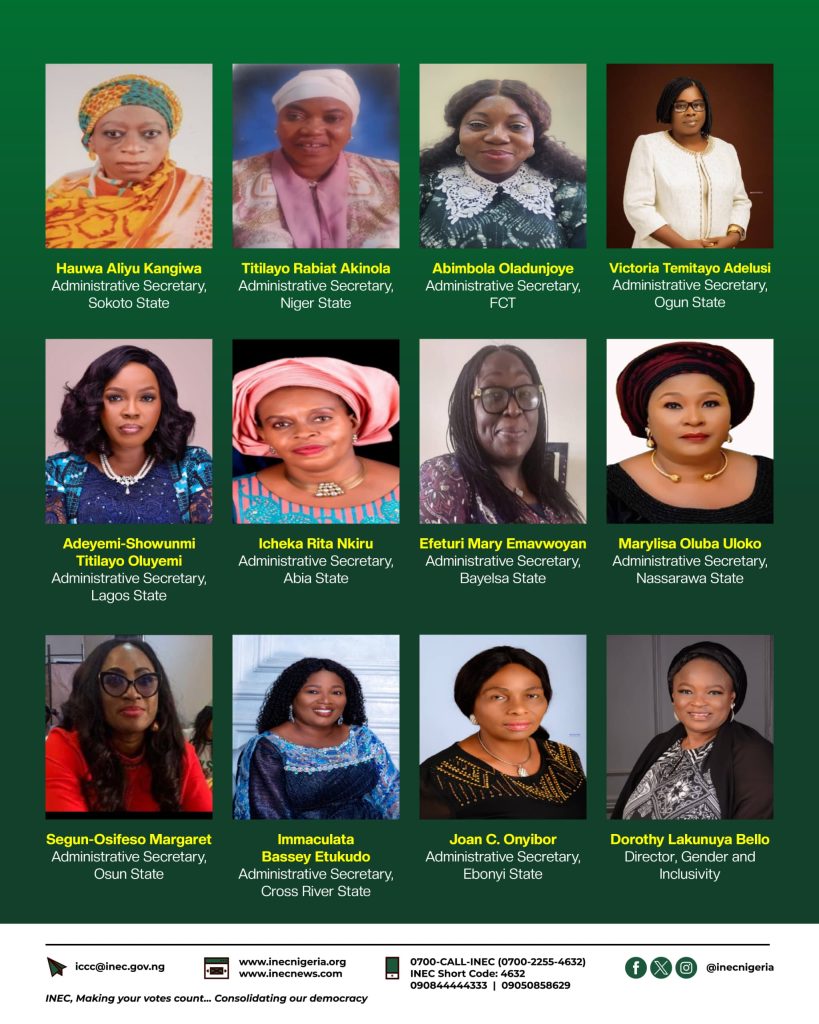
Administrative Secretaries: There are 37 Administrative Secretaries at INEC, 12 of whom are women, accounting for 32.4% of the administrative leadership.
Directors: Of the 26 Directors, 11 are women, making up 42.3% of the leadership in this directorate. This reflects the increasing representation of women in shaping the electoral process.
These numbers show the progress made, but INEC recognizes the need for ongoing efforts to achieve greater gender equity across all leadership levels. The Commission is committed to creating an environment where women are not only participants but active contributors to shaping Nigeria’s electoral landscape.
INEC is also working on policies to encourage greater participation of women at all levels of the electoral process, from candidates to voters, from election administrators to party representatives. The Commission is committed to breaking down the barriers women face, including societal expectations, lack of support systems, and gender-based violence.
As INEC celebrates this year’s International Women’s Day, it reaffirms its dedication to gender equality. The Commission understands that the future of democracy in Nigeria is deeply tied to the empowerment of women and their full participation in the electoral process. Gender equality will remain a priority for INEC in all areas of its work.
Therefore, INEC urges all Nigerians, both men and women, to join in advancing gender equality, not only in the electoral process but across all aspects of life. When women are empowered to take leadership roles and given equal opportunities, Nigeria’s democracy will be stronger, governance will be more inclusive, and the future will be brighter for everyone.
*Victoria Eta-Messi is the Director, Voter Education and Publicity at INEC