

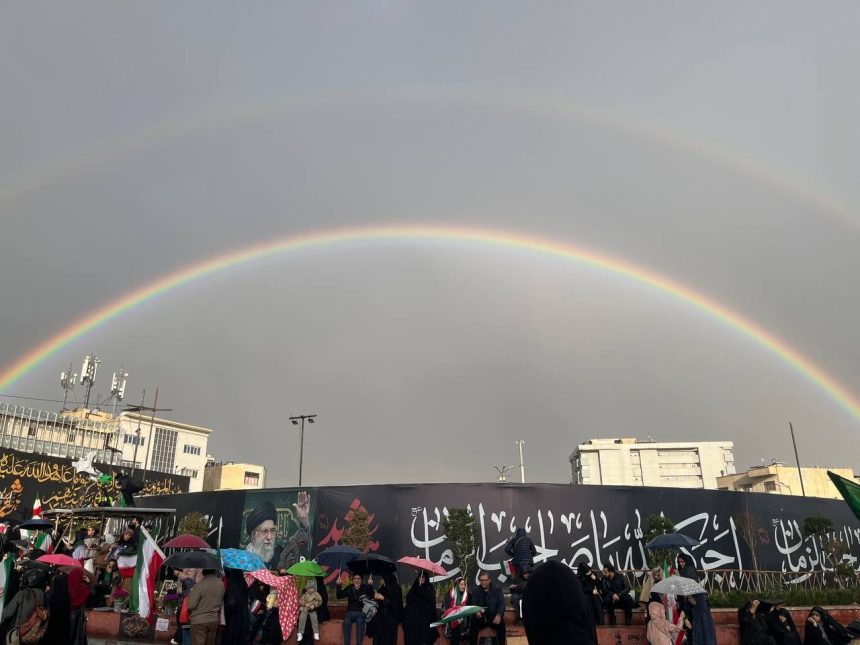
Massive rainbow graces rally at Tehran’s Enghelab Square as Iran celebrates Persian New Year
Millions of Iranians shrugged off the dangers of possible US and Israeli bombs to celebrate the joy of the Persian New Year.
Nowruz, the Persian New Year marking the arrival of spring, has been celebrated for more than 3,000 years across Iran and parts of Central Asia and the Middle East, making it one of the oldest festivals in the world.
The holiday usually falls on March 20 or 21 and begins nearly two weeks of family visits, meals and gatherings.
Incidentally, today’s new year celebration also overlaps with Eid El Fitri celebrations, which was equally celebrated today in Iran, though most Muslims around the world celebrated Eid yesterday.
In his new year message, the President of Iran Masoud Pezeshkian said the country was not after war with brothers nations of the Islamic world, or with countries in West Asia.
He however called for the creation of an Islamic Forum across West Asia to promote unity among the countries.
Pezeshkian, who accused Israel of trying to sow divisions among nations in West Asia by ‘staging false flag attacks’ on neutral countries, also criticized US President Donald Trump for claiming footage of anti-war rallies in Iran were AI-generated.
In his own message, the Supreme Leader of Iran, Ayatollah Seyyed Mojtaba Khamenei Iran Leader said the slogan for the new year is ‘Resilient economy alongside national unity, security’
Ayatollah Khamenei said boosting people’s livelihood is a form of significant defence against economic war which his country was facing.
“Cohesion amongst people will become stronger, and enemies will be disgraced,” he said.
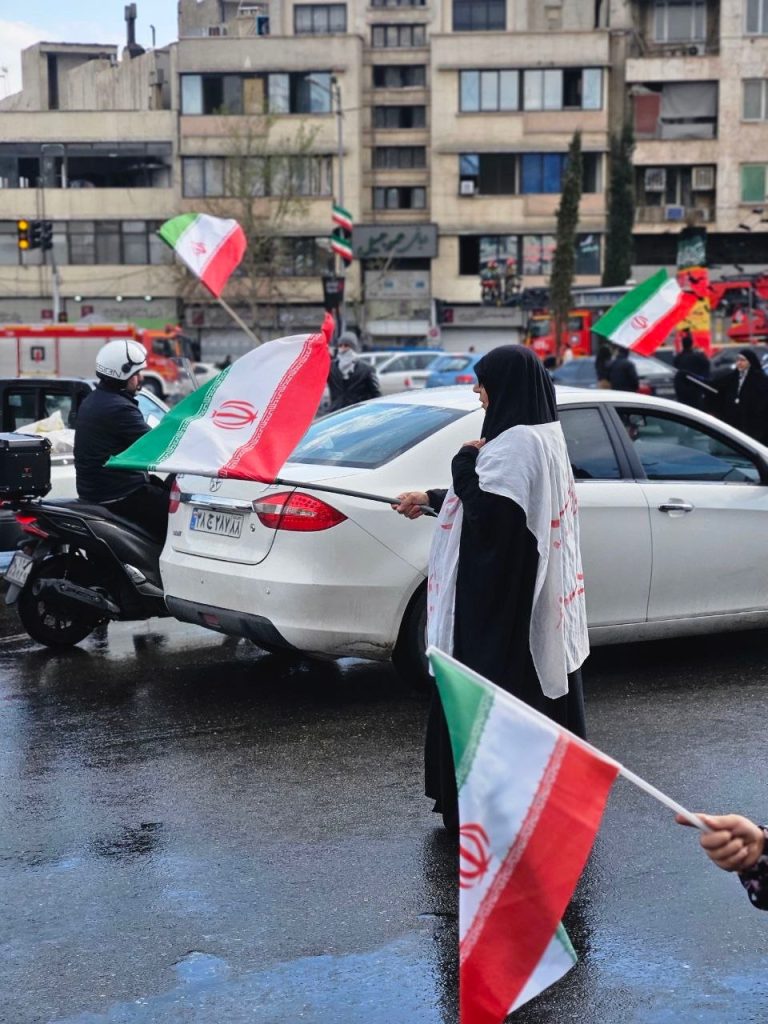
The celebration in Tehran was graced by a massive rainbow across the city, which revelers shared on social media.
The US and Israel attacked Iran on 28 February, targeting its missile infrastructure, military sites and leadership. This has led to a raging war that has impacted on most countries in the Levant as well as the global economy, especially after Iran closed the Strait of Hormuz to most petrol tanker traffic.