
By Shakirudeen Bankole
Calls for adequate compensation for the displaced Indigenes of Abuja (IOAs) have resurfaced again, as experts warned that injustice to the group represents a security threat to the nation.
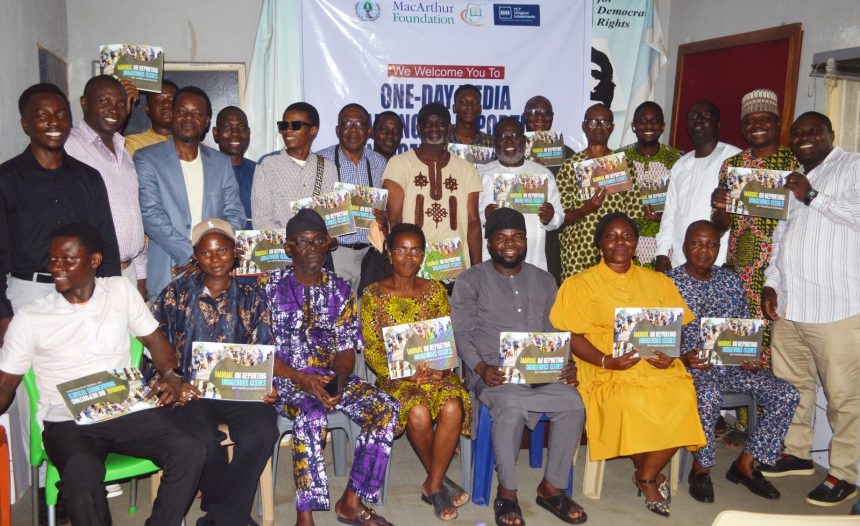
The clamour reared its head at a one-day training organised by the Network of Journalists on Indigenous Issues (NEJII), on how to report issues affecting ethnic minorities and displaced indigenous people in the country. The training was supported by the MacArthur Foundation.
In his opening remarks, NEJII Coordinator, Mr. Adewale Adeoye, said the training had become expedient, especially in the light of the continuous downplaying and ignoring of their plights and the social implications surrounding the matter.
According to him, an estimated 2.5 million original inhabitants of Abuja were forcefully evicted in 1976 when the then Military Head of State, General Murtala Muhammed, relocated the Federal Capital Territory from Lagos to Abuja.
He noted that all plans to compensate, resettle, or reintegrate the affected people were either dishonestly executed or abandoned altogether, leaving over two million people suffering identity crisis, political marginalisation, displacement, and harsh economic realities.
“At this time, we are worried that if this injustice is not addressed, it would sooner or later snowball into a serious national security threat to the nation,” Adeoye said.
He explained that his group had already successfully intervened and mediated in an orchestrated plan by the displaced Abuja indigenes to embark on relentless peaceful protests that would see them blocking all entry and exit points in and out of Abuja, as a way of calling attention to their plights.
“This is just a temporary measure to avert the looming challenge,” Adeoye said, insisting that “justice remains the soul of peace.”
It would be recalled that in 1976, the late Muhammed moved Nigeria’s government headquarters from Lagos to Abuja, using a military decree, seizing about 7,315 to 8,000 square kilometres of land in the process.
The affected indigenous people were ethnic groups such as the Gbagyi (Gwari), Gbari, Gwandara, Bassa, Koro, among others.
The decree meant there was no consultation whatsoever with the indigenous people. The only remediation efforts introduced were those deemed appropriate by a committee set up by the military and headed by Justice Aguda.
According to investigations, on February 3, 1976, the late Muhammed had assured the affected people that they would be adequately compensated, saying the usage of the land was to make Abuja a symbol of unity without “indigene” claims.
In the same 1976, the Federal Government committee set up to plan compensation for the evictees proposed an estimated payout of roughly N2.8 million.
But the government claimed an incapability to fund the project because the national annual budget at the time was about N400 million.
“Even at that, the government changed its approach from comprehensive resettlement and compensation to the integration of the fewer remaining indigenes who stayed back in the FCT,” said Francis Abayomi, one of the facilitators and a member of the Editorial Board of The Guardian Newspaper.
“These people were very few compared to the larger pool of over 2.5 million that were forcefully displaced. Majority of them moved to Nasarawa, Niger, and elsewhere,” he added.
A review of compensation records showed that government only handed out meagre amounts ranging from N500 to N20,000 to owners of land that now hosts monumental structures such as Aso Rock and the National Assembly.
Abayomi, an accomplished media executive, provided detailed insights into the IOAs’ predicament during his presentation on the Manual of Reporting Indigenous People and Ethnic Minority.
The publication, titled Manual on Reporting Indigenous Issues, was authored by NEJII, with an editorial team featuring Adewale Adeoye, Wale Kasali, Ologeh Joseph Chibu, Adekoya Samson, Saliu Ahmed, and Uche Madu.
The 40-page document contains technical knowledge, guidance, and sources, including relevant instruments, treaties, conventions, and laws supporting the need to advocate for the rights of displaced indigenous people around the world.
Some of those resources include:
- Chapter 2 of the United Nations Declaration on the Rights of Indigenous People (UNDRIP). UNDRIP, adopted on 13 September 2007, sets minimum standards for the survival, dignity, and wellbeing of the world’s indigenous people. It was adopted by 144 countries, including Nigeria. Articles 3–5, 8–15, and 25–32 detail the inalienable rights of indigenous people to self-determination, autonomy, cultural identity, and ownership of lands, territories, and resources.
- United Nations Permanent Forum on Indigenous Issues (UNPFII). Established in 2000 by the UN Economic and Social Council (ECOSOC), it is the highest-level advisory body on indigenous issues, promoting the preservation of civilisation, language, culture, and heritage of indigenous peoples.
- The International Labour Organisation Convention 169 (1989) on Indigenous and Tribal Peoples, a binding treaty adopted to safeguard the rights of indigenous populations.
Panel and breakout sessions were held at the training, featuring knowledge sharing by veteran and intermediate-level practitioners.
Discussants dwelt on the need for members of the fourth estate of the realm to adopt radical and non-conventional approaches in helping endangered ethnic minorities.
“Imagine you are a 17-year-old adolescent, and when you want to write the Joint Admissions and Matriculation Board—JAMB—you are asked to choose your state of origin. It is not a difficult thing to do, right?” Tokunbo Oyetunji of Arise Television asked a young participant. The young lady nodded in affirmation.
Oyetunji noted that it was only recently that he came face-to-face with the agonising experiences of the displaced IOAs.
“During federal lawmakers’ elections, every tribe and group goes out to vote for the candidate that would represent them at the Assembly. The Abuja Indigenes do not have this…” he said.